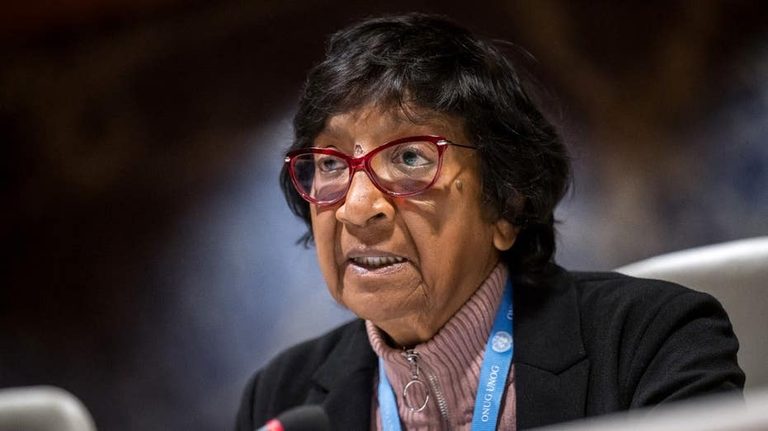
Navanethem “Navi” Pillay, an 85‑year‑old jurist with a distinguished career in international law, was announced as this year’s Nobel Peace Prize laureate. The Nobel Committee highlighted her “efforts to promote peace and international law” as the basis for the award.
Why the Committee chose Pillay
The Committee stressed that strong international judicial institutions must be able to enforce the rule of law if the world hopes to mediate the growing number of wars and conflicts. It also warned that political attacks against judges and international law are becoming more common, underscoring the relevance of Pillay’s work.
Pillay’s recent work on Gaza
From 2021 to 2025 Pillay chaired the UN Independent International Commission of Inquiry on the Occupied Palestinian Territory. In September 2025, the commission concluded that Israel had committed genocide against Palestinians in Gaza and accused Prime Minister Benjamin Netanyahu and former Defense Minister Yoav Gallant of inciting genocide. Pillay said, “It is clear that there is an intent to destroy the Palestinians in Gaza through acts that meet the criteria set forth in the Genocide Convention.” Israel dismissed the findings as “distorted and false.”
Criticism of the Nobel decision
Israel‑based lawyer Nitsana Darshan‑Leitner, president of the Shurat HaDin Law Center, questioned the decision, stating that a peace prize should honor those who build peace, not those she says have turned Israel into a defendant in a campaign of political delegitimization. She added that the Middle East remains engulfed in conflict.
Pillay’s lifelong achievements
Pillay was born in South Africa’s Natal province to a Tamil Indian family. In 1967 she founded her own law firm, becoming the first non‑white person to do so in the province. She spent 28 years as a defense attorney, representing anti‑apartheid activists and securing the right of political prisoners on Robben Island, including Nelson Mandela, to consult with lawyers.
In 1995, after Mandela became president, he nominated Pillay to the High Court of South Africa, making her the first non‑white woman to serve there. That same year she was elected to the International Criminal Tribunal for Rwanda, where she helped secure the conviction of Jean‑Paul Akayesu for inciting genocide and recognized rape as a crime against humanity.
In 2003 Pillay was appointed a judge on the International Criminal Court, an institution that has faced criticism from some U.S. officials. After five years she became the UN High Commissioner for Human Rights in 2008, condemning both Israel and Hamas for possible violations of international law during the 2014 Gaza war and criticizing U.S. funding for Israel’s Iron Dome program.
Current work
Pillay now serves as an ad hoc judge on the International Court of Justice, hearing a case accusing Myanmar of committing genocide against the Rohingya minority.
The Nobel Peace Prize award to Pillay highlights the ongoing debate over the role of international courts, the enforcement of human rights standards, and the challenges of achieving lasting peace in conflict zones.
Original reporting: Fox News (HLL/CB) — read the source article.