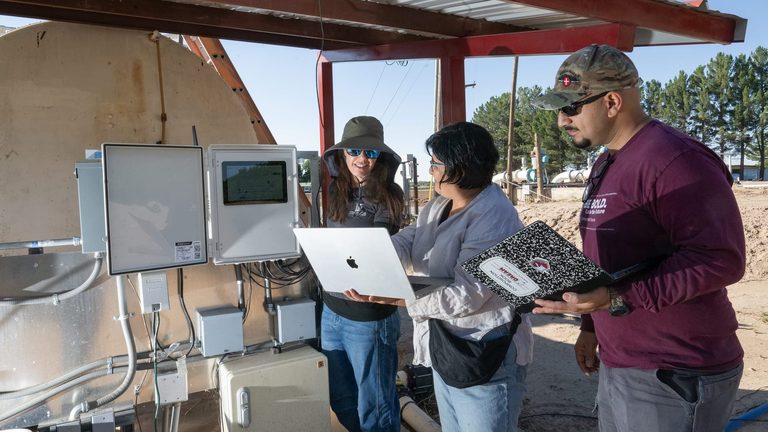
LAS CRUCES, N.M. – Assistant professor Israel Joukhadar of New Mexico State University’s Department of Plant and Environmental Sciences is leading a multi‑disciplinary study aimed at helping local growers stretch scarce water supplies. The project pits four irrigation‑scheduling methods against each other in field trials of winter wheat, seeking the most water‑efficient way to grow crops in the arid Southwest.
Four methods put to the test
The research team, which includes computer‑science faculty members Christabel Wayllace and Gaurav Panwar, is evaluating:
- A soil‑sensor system that measures volumetric moisture, soil‑water potential and weather data.
- A commercial scheduling platform that relies on real‑time meteorological information.
- A “feel‑and‑appearance” approach that uses hand‑taken soil moisture readings.
- An AI‑driven smart‑irrigation method that employs reinforcement‑learning agents within a simulation that incorporates live soil‑moisture and weather data.
Wayllace and graduate student Sarah Thomas built the AI agent, while Panwar oversaw privacy and security, ensuring that data collection follows best‑practice safeguards.
Early results favor sensor technology
Preliminary observations from the fall 2025 wheat trial show that plant growth and physiological indicators were similar across all methods during early establishment. However, total water applied varied noticeably. The soil‑sensor system proved the most water‑efficient, delivering the lowest irrigation volume. The commercial platform used the most water, and the AI system fell between the two extremes.
“These early findings suggest that sensor‑based scheduling can significantly reduce water use without sacrificing crop health,” Joukhadar said. “Our AI model shows promise, but we need more data to confirm its advantage over proven sensor technology.”
Next steps and broader impact
The team plans to harvest the wheat crop later this fall and analyze yield and biomass to identify the method that achieves target production with the least water input. A second trial with chile peppers in spring 2026 was hampered by unexpected soil conditions and weather, but a third wheat trial is underway and will continue through 2027.
Joukhadar emphasized that the research is intended to provide practical, science‑based tools for New Mexico’s farmers and ranchers. “Our goal is to deliver clear, actionable results that directly enhance productivity and profitability for growers facing a warming climate and dwindling water supplies,” she said.
Local relevance
Water scarcity is a pressing concern for Las Cruces and the broader Southwest, where agriculture accounts for a large share of water use. By identifying the most efficient irrigation practices, the NMSU study aims to help regional producers conserve water, lower costs, and sustain the agricultural heritage that supports families and communities across the state.
For more information about the project or to request data for local growers, contact Carlos Carrillo López at 575‑646‑1955 or [email protected].
Original reporting: Organ Mountain News (Las Cruces / Doña Ana County) — read the source article.