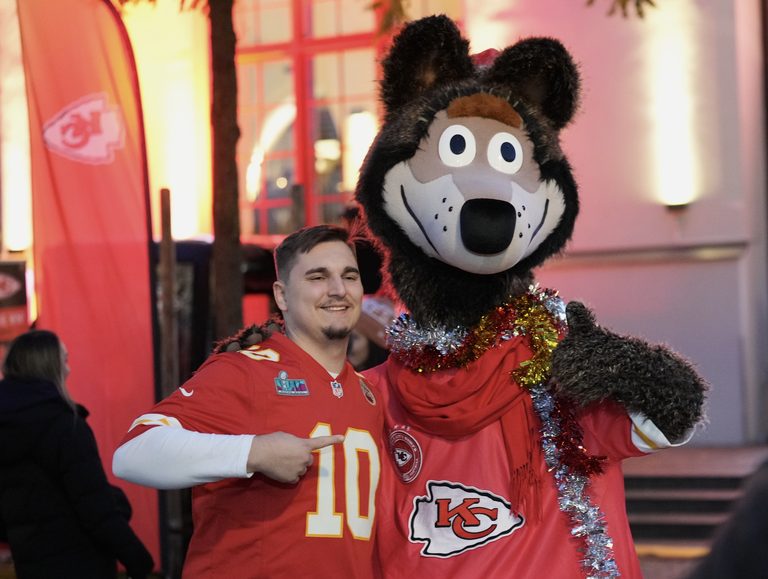
Munich, Germany – This weekend the National Football League turned its mascot diplomacy toward German fans, debuting three new characters that wear the colors of the German flag and speak the language of local enthusiasm. The Lions introduced Leo, a shaggy lion whose mane mirrors the black‑red‑gold of Germany, while the Falcons sent Fritz Falcon, a feathered counterpart to longtime mascot Freddie Falcon. Kansas City’s KC Wolf also appeared as KC Wolfgang, adding a German twist to the team’s existing mascot family.
Local fans embrace the mascots
Fans gathered at a Lions fan fest in Munich to watch Leo stand on a table, urging the crowd to cheer as a replica of Detroit great Barry Sanders tapped a wooden keg of beer with a mallet. “We love it when mascots run around and put on a show in the stadium. It’s very funny, and the atmosphere, we love it,” said local supporter Theresa Goebel.
Fritz Falcon took part in a Berlin event last year and this week ran a 40‑yard dash in Munich, tripping and falling to the delight of onlookers. KC Wolfgang, described by the Chiefs as bringing “disciplined energy” to Germany, joined other regional mascots – KC O’Wolf for Ireland, KC Wolfington for Britain and KC Lobazo for Spain – in a coordinated effort to make the NFL feel at home abroad.
Why mascots matter to the league
Alexander Steinforth, general manager of NFL Germany, explained that the league’s 11 teams with German marketing rights are using these characters to deepen connections with local audiences. “People love the Americana, but to reach that additional layer of fandom we have to go the extra mile and find ways to talk to the fans,” he said. “Local angles are super important for us. Reinventing a second mascot is great and fun, and it’s just one layer of what we’re doing to be local.”
Germany is the most sought‑after market in the NFL’s global program, with all 11 teams holding league‑granted marketing rights there. The mascots are part of a broader strategy that includes fan festivals, merchandise collaborations and community outreach, such as the Colts’ mascot Blue partnering with German lifestyle brand Lobster & Lemonade for a limited‑edition apparel line.
Beyond the mascots
Other teams are also sending their regular mascots overseas. New England Patriots’ Pat Patriot, a fictional figure born on July 4, 1776, has been visiting beer halls and playing flag football with local children. Seattle’s Bam C. Hawk, introduced two years ago as an international mascot, continues to appear at fan events across Europe.
These efforts reflect the NFL’s belief that cultural adaptation – from mascot design to local partnerships – can turn casual observers into dedicated supporters. By blending American football excitement with German symbols and humor, the league hopes to build lasting loyalty in a market traditionally dominated by soccer.
For fans in Munich and across Germany, the mascots offer a playful bridge to a sport that is still growing in popularity. As the NFL’s season progresses, the league will likely expand its mascot program to more cities, further cementing its presence in Europe.
Original reporting: KOCO Sports (Oklahoma City) — read the source article.