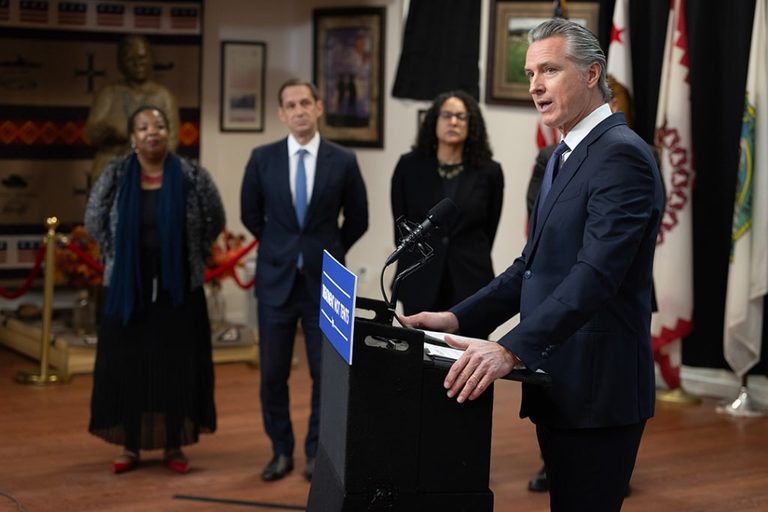
Governor Gavin Newsom issued an executive order today that commutes every current death sentence in California to life without parole. The order applies to all 548 people on the state’s death row list, including seven defendants whose cases originated in Shasta County.
Local reaction
Shasta County District Attorney Stephanie Bridgett responded swiftly, calling the decision “completely irresponsible” and saying it places the governor’s political agenda ahead of victims’ rights. In a press release she stated, “Governor Gavin Newsom’s decision fails to consider the victims, the voters, or the interests of justice.” Bridgett’s remarks reflect the strong pro‑death‑penalty sentiment in the county, where 72.2% of voters opposed Proposition 62, the 2016 measure that would have repealed the death penalty.
Background on California’s death‑penalty moratorium
California has not carried out an execution since 2006, when a federal judge ruled that the state’s three‑drug lethal‑injection protocol violated the Eighth Amendment’s ban on cruel and unusual punishment. In 2019, Newsom imposed a moratorium on executions and closed the execution chamber at San Quentin, moving inmates to other facilities. The new order does not eliminate the death penalty as a sentencing option; it merely replaces existing death sentences with life without parole.
Legal considerations
University of California, Berkeley law professor Elisabeth Semel, co‑director of the Death Penalty Clinic, explained that the California Constitution requires the state Supreme Court’s approval before the governor can grant clemency to individuals with more than one felony conviction. Approximately 60% of those on death row fall under this requirement, meaning the courts will review whether the governor’s order constitutes an abuse of constitutional authority.
Semel noted that the court’s review is limited to a single question: whether the recommendation of clemency for a group of individuals is an abuse of the governor’s constitutional powers. The court does not examine each case on its merits.
Potential financial impact
Semel also highlighted possible cost savings. Of the 548 death‑row inmates, about 370 lack counsel for post‑conviction proceedings, leading to decades‑long delays and significant expenses. Reducing death‑sentence cases to life without parole could alleviate the financial burden on the state’s legal system.
Political context
The decision arrives as California’s newly elected governor, Xavier Becerra, reaffirmed his support for the moratorium during his campaign, emphasizing concerns about wrongful convictions and the disproportionate impact of the death‑penalty system on Black and brown communities. Becerra’s statement on social media echoed Newsom’s rationale, promising to continue moving the state away from what he described as a costly and flawed system.
What’s next for Shasta County cases?
The seven Shasta County defendants will now serve life without parole unless the state Supreme Court intervenes and determines the governor exceeded his authority. The district attorney’s office has indicated it will monitor the legal process closely and continue advocating for the rights of victims and their families.
Original reporting: Shasta Scout (Redding) — read the source article.