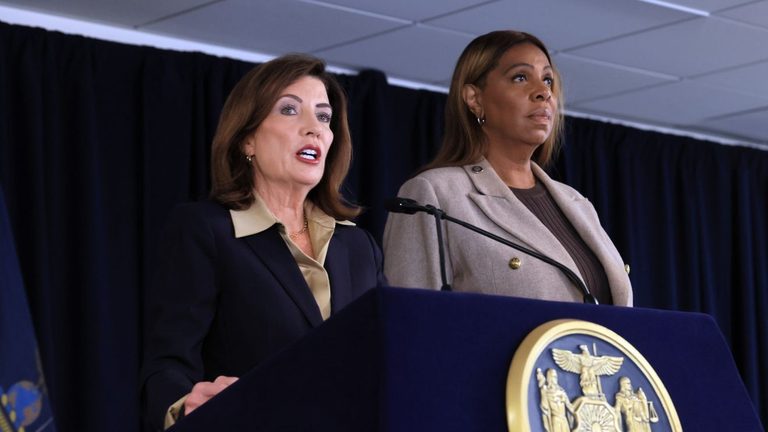
Governor Kathy Hochul and Attorney General Letitia James are moving quickly to enforce the state’s newly‑passed Local Cops, Local Crimes Act. The two officials mailed formal letters to every county executive and sheriff across New York, outlining a legal deadline of Nov. 25, 2026, for ending any agreement that permits federal civil immigration detention in local correctional facilities.
What the law requires
The Local Cops, Local Crimes Act, signed by Gov. Hochul in May 2026, bars any local government or law‑enforcement agency from entering into, renewing, extending, or maintaining a contract, intergovernmental service agreement, or any informal arrangement that houses or detains people solely for civil immigration violations. Agencies that currently have such agreements must invoke their termination provisions by the Nov. 25 deadline; after that date, any remaining agreement is void under state law.
If an existing contract covers both criminal and civil detention, the agency must separate the civil‑immigration portion and end that portion by the deadline. The law does not affect contracts for individuals facing pending federal criminal charges, provided the agreement does not include civil‑immigration detention.
State officials’ rationale
Gov. Hochul emphasized that local law‑enforcement resources should be devoted to protecting New Yorkers from dangerous criminals, not to assisting ICE’s “aggressive deportation agenda.” She said the state is ensuring counties are prepared to wind down any agreements that give federal agents access to local jails.
Attorney General James added that the legislation draws a clear line between local public‑safety responsibilities and federal immigration enforcement. She noted that taxpayer dollars belong to keeping communities safe, and the Office of Immigrant Trust will provide guidance to help local officials meet their obligations.
Enforcement mechanisms
The Office of Immigrant Trust, part of the Attorney General’s office, is authorized to receive complaints, conduct investigations, issue subpoenas, and bring civil actions to enforce compliance. Residents who believe a county, city, school, contractor, or other covered entity has violated the law may file a complaint online. Those who witness federal enforcement actions anywhere in the state can also report them through the Attorney General’s federal‑action portal.
Local impact
County executives and sheriffs have been asked to respond in writing, detailing the steps they have taken to comply or confirming that no prohibited agreements exist. The deadline gives local jurisdictions roughly three months to unwind existing contracts, a timeline that state officials say balances urgency with practical implementation.
While the law does not prevent local agencies from housing individuals charged with federal criminal offenses, it does eliminate the ability of ICE to rely on local jail space for civil immigration detention. This shift is expected to free up jail capacity for New York’s own criminal‑justice priorities and reduce the financial burden on local taxpayers.
Next steps
County officials are expected to submit compliance reports to the Office of Immigrant Trust well before the Nov. 25 deadline. The state will monitor submissions and may pursue civil enforcement actions against any jurisdiction that fails to meet the statutory requirements.
Critics of the law argue that it could hamper cooperation with federal authorities on immigration matters, but state leaders maintain that the primary responsibility of local law‑enforcement is to protect New Yorkers from crime, not to serve as an arm of federal immigration enforcement.
Original reporting: CBS 6 WRGB Albany (local) — read the source article.