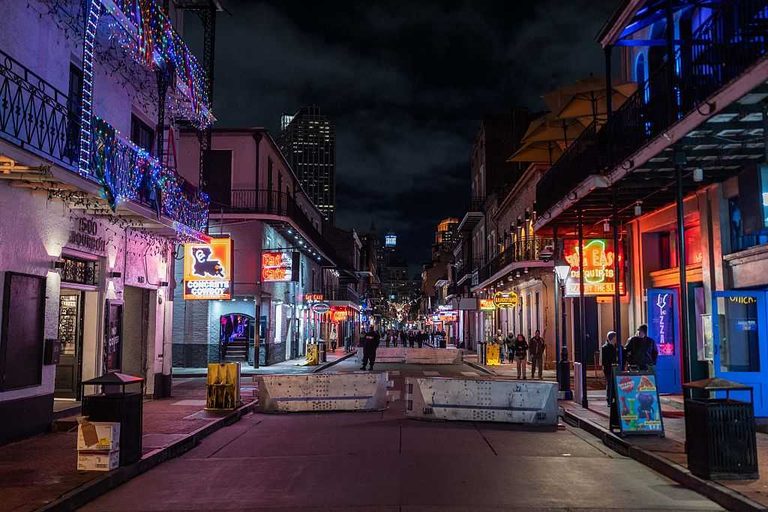
When the clock strikes 8 p.m. on Bourbon Street, musicians, singers and tarot card readers are ordered to leave the public right‑of‑way. The curfew, part of a joint effort by the New Orleans Police Department, Louisiana State Police Troop NOLA and the Orleans Parish Sheriff’s Office, is intended to improve public safety in the French Quarter.
City officials explain the ordinance
According to a statement from the NOPD, the ordinance was adopted last week after a review of safety concerns in the area. “LSP Troop NOLA remains committed to maintaining public safety in and around the French Quarter,” the Louisiana State Police said. “We are coordinating with NOPD and city officials to gain clarity on our shared goals and approach to addressing public‑access concerns. We will continue working with our partners to ensure a safe and accessible environment for residents, businesses, visitors, performers and emergency responders.”
Performers voice opposition
Street artists say the curfew threatens the cultural fabric that makes the French Quarter a world‑renowned destination. “We’re a vital part of the French Quarter and Bourbon Street,” said the Ghost Queen, a well‑known tarot card reader who was forced to stop a reading for tourists at 8 p.m. “They just said, ‘You got to go, or we’re going to arrest you and take you to jail.’”
Jamie Williams, a gospel singer who has performed on Bourbon Street for decades, added, “It’s a tradition. I want us to be treated as human beings and have the right to earn our money without being harassed.” Performers reported multiple encounters with state and local officers who interrupted their acts and threatened arrest.
Council hearing and next steps
On Thursday, dozens of performers attended a New Orleans City Council meeting to protest the ordinance. Council members listened to the concerns and promised to keep the discussion open. The council will revisit the issue at the next Criminal Justice Committee meeting scheduled for November 30.
City leaders emphasized that the curfew is not intended to silence artistic expression but to balance safety with the vibrant street life that defines the French Quarter. “We recognize the importance of street performers to the character of Bourbon Street,” said a council spokesperson. “Our goal is to find a solution that protects public safety while preserving the cultural traditions that attract visitors from around the world.”
Community response
Local business owners expressed mixed reactions. Some support the curfew, citing late‑night noise complaints and concerns about crowd control. Others worry that limiting performances could reduce foot traffic for restaurants and shops that rely on the evening tourist surge.
Tourists visiting the French Quarter reported mixed experiences. While some appreciated a quieter atmosphere after dark, others missed the spontaneous music and street‑level entertainment that have long defined Bourbon Street.
What’s at stake
The debate highlights a broader tension between public‑safety initiatives and the preservation of cultural heritage in historic districts. As New Orleans seeks to maintain its reputation as a lively, family‑friendly destination, the outcome of the council’s deliberations will shape how the city balances safety with the freedoms of its street artists.
Stakeholders are encouraged to submit written comments before the November 30 meeting. The council has pledged to consider all viewpoints before deciding whether to amend, extend or repeal the curfew ordinance.
Original reporting: WESH Orlando — read the source article.