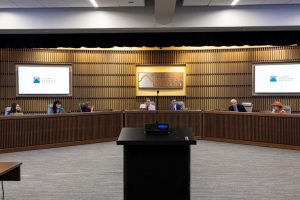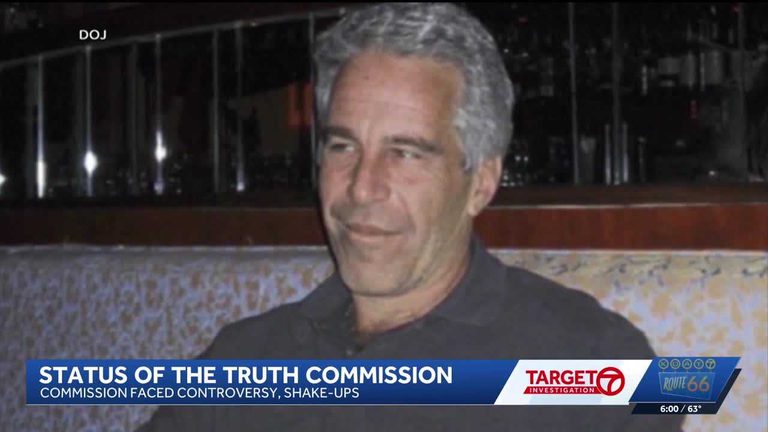
The bipartisan Epstein Truth Commission, created by the New Mexico Legislature earlier this year, continues to work toward a year‑end report despite recent resignations and internal disputes. The commission was formed after Congress released more than a million files that referenced Epstein’s activities in the state, granting the panel subpoena power to investigate potential witnesses and related entities.
Commission composition and recent changes
Originally the commission consisted of four members: Republican Rep. Andrea Reeb, Democratic Rep. Andrea Romero, Democratic Rep. Marianna Anaya, and Republican Bill Hall. Reeb stressed the importance of bipartisanship, stating, “If it’s a Democrat, it’s a Democrat; if it’s a Republican, it’s a Republican. We’ve had no pushback from our side of the aisle, they feel we should be a part of it.”
In the summer, a preliminary report omitted a 2014 private‑jet flight taken by then‑running‑mate Gov.-elect Deb Haaland, a detail that surprised Reeb and Hall. Anaya said all four members had agreed the flight would not be included, and each member reviewed the report line by line.
Legal and ethical challenges
Later, the New Mexico Department of Justice announced that paid employees of state agencies could no longer serve as lawmakers due to potential conflicts of interest. Rep. Romero, who had taken a part‑time position with the Santa Fe County District Attorney’s Office, faced calls from Republican state senators to resign from both the legislature and the commission. She subsequently quit the DA job, describing the use of the commission’s PR firm for the announcement as an “honest mistake.”
In September, a federal judge ruled that Rep. Reeb, also an attorney, could not continue serving as a lawmaker while acting as a special prosecutor, citing a violation of New Mexico’s separation‑of‑powers provision. Reeb resigned from both the legislature and the commission, leaving the panel with three members—only one Republican.
Members say work remains on track
Despite the reduced roster, Anaya and Romero assert that the commission’s mission has not been compromised. “We’ve continued the work, the three of us, toward the end goals we committed to from the beginning,” Anaya said. Romero added, “We have remained committed to producing these results and the public will see what we were able to do; nobody is above the law.”
Bill Hall, the remaining Republican member, echoed that sentiment, noting that the commission has faced limited public meetings since August. “If my colleagues believe the commission is still strong, I would ask them to schedule the next meeting, make our progress public, and let New Mexicans judge the work for themselves,” Hall said.
Looking ahead
The commission remains on schedule to release its final report by the end of the year, according to the remaining members. Their focus is on delivering a comprehensive accounting of how Epstein’s network operated in New Mexico and ensuring accountability for any individuals or entities involved.
Local residents and advocacy groups continue to monitor the commission’s progress, emphasizing the need for transparency and swift action. As the investigation moves forward, the bipartisan nature of the panel is highlighted as a strength, reinforcing the belief that truth‑seeking can transcend partisan lines.
Original reporting: KOAT Albuquerque — read the source article.