New Mexico is taking concrete steps to address its persistent drought by tapping underground brackish‑water reserves. Engineers from WSP, the firm contracted by the state, are currently drilling two deep wells on the Quail Ranch on the West Mesa, targeting depths of 7,600 feet to confirm the size and quality of the resource.
Legislative backing and strategic goals
The effort stems from the 2025 Strategic Water Supply Act, co‑sponsored by Sen. George Muñoz. The legislation directs the state to explore brackish water as a supplemental source, acknowledging that “we live in the arid Southwest, we’ve chosen that. And so we got to figure out how to manage that,” Muñoz said.
Potential volume and comparison
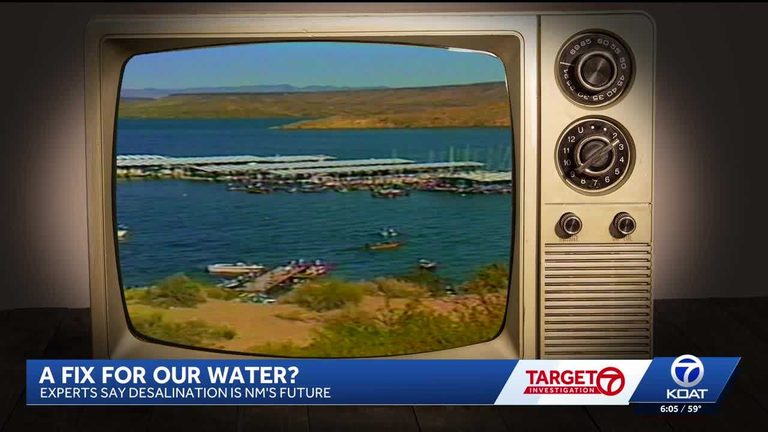
State estimates put the brackish reserves at roughly 1.3 trillion gallons, which translates to nearly 4 million acre‑feet of water. For perspective, Elephant Butte Lake – New Mexico’s largest reservoir – holds about 2.2 million acre‑feet when full.
Desalination plans modeled after successful Texas plant
One objective is to construct large‑scale desalination facilities similar to the Kay Bailey Hutchison Desalination Plant in El Paso, Texas. That plant, described by Scott Reinert of El Paso Water, processes about 30 million gallons of brackish water each day, supplying roughly 100,000 residents. “We love the Rio Grande. We use it as a water supply here, but it’s been subject to drought for many years. Our way of dealing with drought is building a plant like this,” Reinert explained.
Technology and waste‑water management
The proposed New Mexico plants would employ reverse‑osmosis membranes to strip salt from the brackish water. Sal Morales, superintendent of the Texas plant, highlighted the membrane’s role in separating salts at the molecular level. Managing the salty by‑product, known as concentrate, remains a challenge. Engineers are evaluating deep‑injection wells and evaporation ponds as potential solutions, according to water‑resources engineer Jeffrey Samson.
Funding and timeline
More than $40 million in state grants and contracts have been earmarked for surveying, engineering studies, and early development. While the funding marks a significant commitment, Sen. Muñoz cautioned that progress has been slower than needed. “New Mexico’s been slow, they haven’t met the challenge yet. The money that has been going out has been slowly. And I don’t think it really targets where we need to be,” he said.
Optimism among stakeholders
Despite logistical hurdles, project leaders remain hopeful. Samson summed up the sentiment: “I think everybody’s marching and rowing in the same direction, which is really promising to see.” A brine‑management plan has already been submitted to the New Mexico Environment Department and is expected to be finalized within the next month.
What this means for New Mexicans
If the desalination plants come online as planned, the state could add a reliable, drought‑resilient water source for both municipal and agricultural use. That would bolster families, farms, and businesses across the region, reinforcing the traditional values of self‑reliance and stewardship that have long defined the Southwest.
Original reporting: KOAT Albuquerque — read the source article.