What exactly do you do at a puppet museum? That’s the question most first-timers ask before they go — and usually forget to ask once they’re inside.
The Ballard Institute and Museum of Puppetry sits on the University of Connecticut’s satellite campus on Audubon Street, which puts it in a part of downtown New Haven that most people pass through on the way to somewhere else. The building is easy to miss: no marquee, no costumed mascot out front. Just a clean gallery space that happens to hold one of the most serious puppet collections in the country.
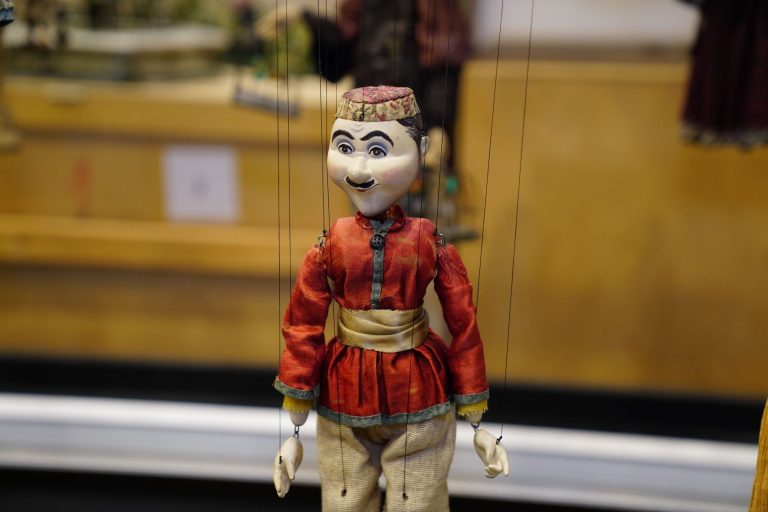
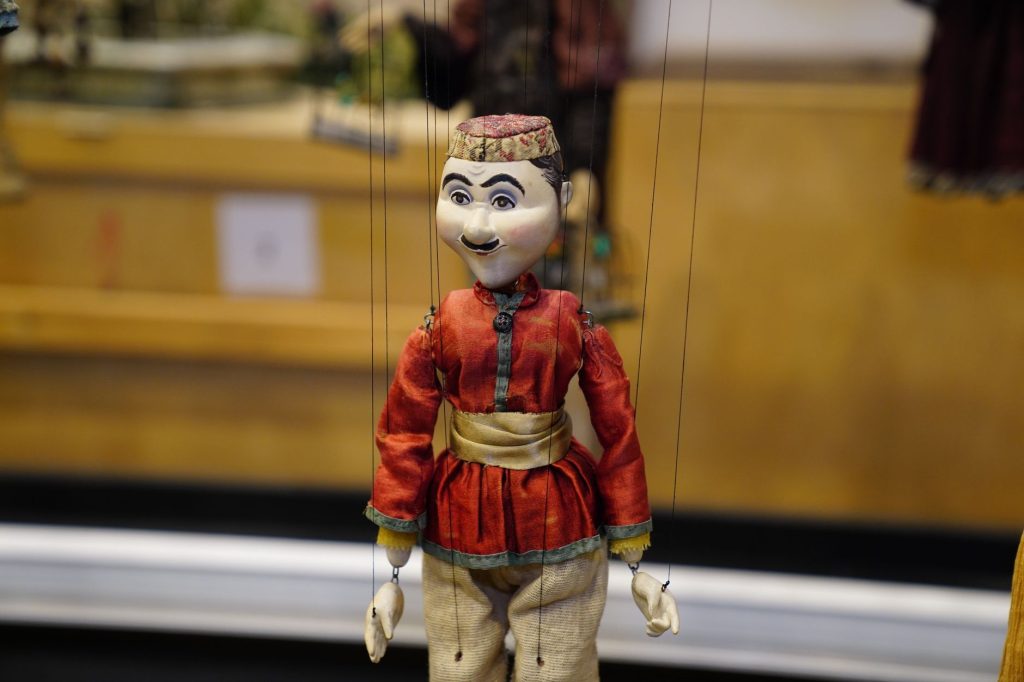
Frank Ballard spent decades building UConn’s puppetry arts program into something that drew students from around the world, and when he retired he left behind thousands of objects: marionettes, shadow puppets, hand puppets, rod figures, ventriloquist dummies, ritual objects, folk pieces. The collection now runs to over 2,000 items and covers puppet traditions from at least forty countries. That breadth is what distinguishes it from novelty. This isn’t a room full of Kermit lookalikes. There are Indonesian wayang kulit shadow figures made from buffalo hide, nineteenth-century Sicilian opera puppets in hand-hammered armor, and American commercial puppets from the early TV era that look eerie and luminous under the gallery lighting.
Exhibitions rotate, so return visits turn up different things. A recent show organized pieces around the history of Black puppeteers in America — an angle you’re unlikely to find treated seriously anywhere else. The interpretive text is written for adults without being academic. Kids do fine here too, but the institute isn’t pitching itself as children’s entertainment, and that restraint makes it more interesting.
Admission is free, which feels almost wrong given what’s on display. Hours run Thursday through Saturday, noon to five — confirm on their website before you go, since the schedule can shift around performances and special events. The institute also stages live productions several times a year, some for general audiences and some designed for families, in a small performance space. Tickets for those run in the ten-to-twenty-dollar range depending on the show.
The staff is knowledgeable and low-key. Nobody’s going to trail you around the room or push you toward the gift shop. The shop itself is modest — some books, a few handmade items — and not the point.
Audubon Street has the Yale School of Drama nearby and a handful of coffee shops within a short walk, so it’s easy to fold this into an afternoon rather than making it a destination in its own right. Plan for forty-five minutes to an hour inside, longer if you’re the kind of person who reads every label.
What stays with you afterward isn’t any single piece but the cumulative effect of the place: the recognition that puppetry has been used, across cultures and centuries, to do real artistic and political and spiritual work. The Ballard Institute takes that seriously. That seriousness is exactly what makes it worth the visit.