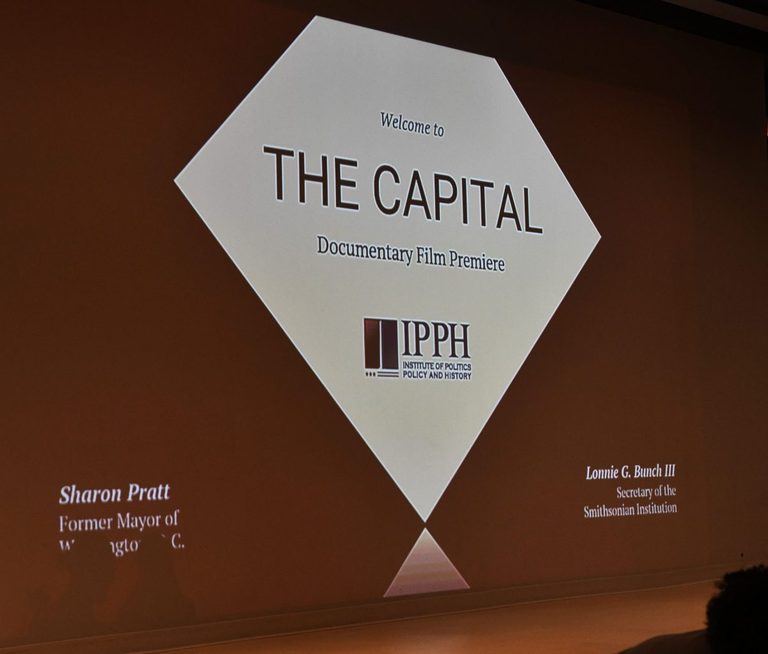
As the nation commemorates its 250th year of independence, the Institute of Politics, Policy and History (IPPH) has launched a six‑part documentary series titled The Capital. The series, now streaming on WETA Plus, PBS and the WETA YouTube channel, explores how Washington, D.C. became the permanent seat of the federal government and why the city’s story is inseparable from the broader American narrative.
Local Leaders Praise the Premiere
At a September premiere held at the Smithsonian’s Hirshhorn Museum, former D.C. mayor and IPPH founding director Sharon Pratt highlighted the strong turnout of more than 250 guests. Pratt said the enthusiastic audience demonstrated a genuine desire among families, educators and faith‑based communities to understand the capital’s origins.
“We are really thrilled at IPPH that we’re getting such a turnout,” Pratt told attendees. She added that the Smithsonian’s involvement gave the event special significance, underscoring the partnership between national institutions and local citizens.
Why Washington’s History Matters
Speakers described the capital as a place of democratic innovation, protest, struggle and resilience. The series covers pivotal moments such as the British attack of 1812, the Civil War, the women’s suffrage movement, the 1963 March on Washington and countless demonstrations in which Americans have traveled to the city to demand that the nation live up to its promise of liberty.
Pratt emphasized that “you can’t tell the American story without telling the story of Washington, D.C.” She argued that understanding the capital’s development helps citizens grasp the founding principle of government “of the people, by the people, for the people.”
Bringing History Into Communities
IPPH plans to take the documentary beyond the museum walls. Pratt said scholars will travel to local churches, schools and community centers to screen the series and field questions. The goal is to make the history of the capital accessible to families and faith‑based groups who may not have the opportunity to visit Washington in person.
Dr. Joy G. Kinard, a scholar affiliated with the Smithsonian’s Anacostia Community Museum and National Museum of American History, echoed this vision. In a 2023 interview, Kinard said the series could become a valuable educational resource for institutions such as the University of the District of Columbia.
“The future of preservation is to invest in it, learn how to cultivate what we have done in the past and how it needs to be cultivated for the future,” Kinard said. She called for continued oral‑history projects, publications and face‑to‑face community readings.
From Stones to Symbols
The documentary also highlights the physical labor that built the capital. Pratt noted the massive effort required to transport stone from Virginia to the site now known as Jenkins Hill, where the Capitol stands today. By acknowledging the contributions of the workers who shaped the city, the series offers a more complete picture of American perseverance.
Availability and Next Steps
The Capital is currently available on WETA Plus, the PBS app and WETA’s YouTube channel. Six individual episodes will also air as short interstitial segments on WETA PBS and Metro channels, directing viewers to the full series. The documentary is scheduled to remain accessible through WETA for two years.
As the United States celebrates its 250th anniversary, Pratt hopes the series will inspire viewers to see Washington, D.C. not merely as a backdrop for national politics, but as a living community whose history reflects the broader American story.
“Our stories need to be told because they are thoroughly American stories,” she concluded.
Original reporting: The Washington Informer — read the source article.