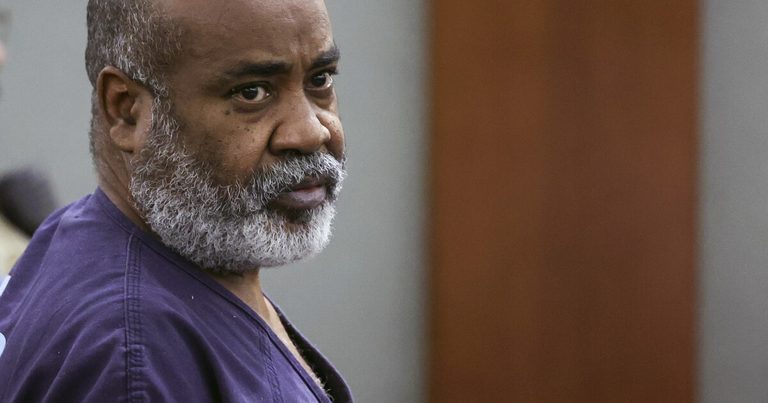
Las Vegas – The Nevada Supreme Court announced Tuesday that it will hear the appeal of Duane Keith Davis, widely known as “Keefe D,” who was convicted earlier this year of first‑degree murder in the 1996 slaying of rap legend Tupac Shakur. The high court placed the case on its docket and gave Davis’ counsel 120 days to submit an opening brief.
Background of the conviction
Davis, 63, received a 40‑year prison sentence after a Nevada jury deliberated for just three hours following a weeks‑long trial in Las Vegas. Prosecutors argued that Davis obtained a firearm and set out that night to hunt down Shakur and Death Row Records co‑founder Marion “Suge” Knight, allegedly after the two men assaulted Davis’ nephew earlier on September 7, 1996.
During the trial, Davis repeatedly claimed he was inside a white Cadillac from which the fatal shots were fired. His former attorney, Michael Sanft, contended that the evidence did not support that theory. Sanft, 55, was found dead at his home on November 6; the cause of death remains under investigation.
Legal basis for the conviction
Nevada law allows a person who aids another in committing murder to be charged with the same offense. Davis is the only surviving member of the four men prosecutors say were in the Cadillac that night.
While Davis has maintained that he merely sat in the vehicle and handed the gun to passengers in the back seat, the jury concluded that his involvement met the statutory definition of first‑degree murder.
Appeal process
The Supreme Court’s order requires Davis’ legal team to file an opening brief within 120 days, outlining the arguments they intend to raise on appeal. The brief will likely address issues such as the sufficiency of the evidence, the jury instructions, and any alleged procedural errors during the trial.
After the opening brief is filed, the state will submit a responding brief, and the court will schedule oral arguments. The appellate court’s decision could affirm the conviction, modify the sentence, or remand the case for a new trial, depending on the merits of the arguments presented.
Public reaction
The case has drawn renewed attention to a murder that has remained unsolved for three decades. While some community members view the conviction as a long‑overdue step toward justice, others remain skeptical, pointing to the brief deliberation time and the lingering questions about who actually fired the shots.
Local legal analysts note that the appeal will test Nevada’s murder‑aiding statutes and may set precedent for future cases involving accomplice liability.
What’s next?
Observers will watch the Supreme Court’s handling of the appeal closely, as the outcome could influence how similar high‑profile cases are prosecuted and appealed in the state. For now, Davis remains incarcerated while his legal team prepares its arguments.
Original reporting: KTNV 13 Action News Las Vegas (local) — read the source article.