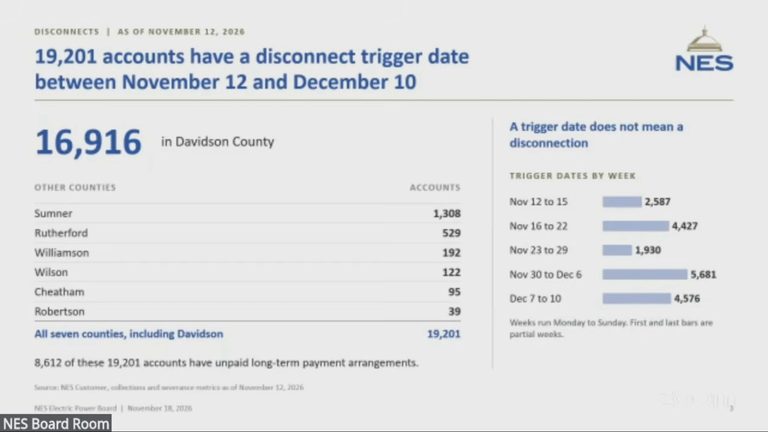
Nearly 20,000 Nashville Electric Service (NES) customers could lose power this month, according to the utility’s latest board meeting. As of Nov. 12, 19,201 accounts have a disconnect trigger date set between Nov. 12 and Dec. 10, with the highest concentration of potential shutoffs expected after Thanksgiving, from Nov. 30 to Dec. 10.
Unpaid balances and looming winter costs
Collectively, the households behind on their bills owe about $5.1 million. Many families are still recovering from the financial strain of last winter’s ice storm, and the approaching cold season adds urgency to the situation.
Limited assistance from LIHEAP
NES partnered with the Metro Action Commission for two days this week to help eligible Davidson County residents apply for the Low Income Home Energy Assistance Program (LIHEAP). In 2024, the U.S. Department of Health and Human Services reported that LIHEAP distributed nearly $83 million to roughly 118,000 Tennessee households, averaging more than $700 per home.
Eligibility depends on income limits that vary by family size; a family of four must earn no more than $63,200 to qualify. However, federal funding for this fall arrived later than expected, leaving the Metro Action Commission with only leftover money from the previous year to distribute.
Local officials voice concern
District 7 Metro Council Member Erin Evans warned that directing customers to under‑funded assistance programs does little to prevent disconnects. “The biggest challenge that I am seeing is pointing people to systems for support that are not necessarily capable of handling, making the connection, and helping people avoid disconnect,” she said.
Evans urged residents to stay in touch with the Metro Action Commission, NeedLink, United Way, and the Mid‑Cumberland Community Action Agency, noting that funding can change quickly and become available on short notice.
How residents can get help now
NES offers a temporary utility‑bill assistance option called Project HELP. Customers can voluntarily add a specific dollar amount to their monthly bill, with contributions processed through NeedLink. This program provides a modest, community‑driven safety net while larger assistance streams remain uncertain.
For families struggling to pay their electric bills, the immediate steps are to contact the Metro Action Commission for LIHEAP applications, explore Project HELP contributions, and monitor local nonprofit resources that may receive fresh funding.
Looking ahead
As winter approaches, the combination of unpaid balances, limited federal aid, and a tight local assistance budget creates a precarious situation for many Nashville households. Continued collaboration between NES, the Metro Action Commission, and community partners will be essential to keep lights on for the city’s most vulnerable families.
Original reporting: NewsChannel 5 WTVF (Scripps) – local — read the source article.