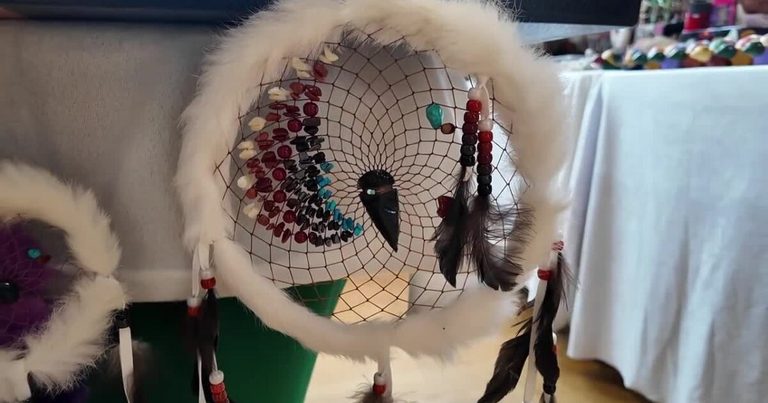
Salt Lake City – Over the weekend the Urban Indian Center hosted the Rebalancing Culture Harvest Arts Market, bringing together Native artists from the region to display carvings, pottery, jewelry and hand‑crafted figures. Visitors walked among tables where creators explained the cultural meanings behind each piece, turning the market into a living classroom of tradition.
Carvings that echo water and the four directions
Harry Bert, a Navajo and Hopi artist, spent three days carving a cottonwood‑root sculpture. He chose the root because, in the arid Utah landscape, cottonwood roots reach deep for moisture. “We need water just to survive,” Bert said, pointing to symbols representing the four directions, seasons and ages of life, as well as markings for snow and rain that help corn grow.
Miniature figures that tell family stories
Renee Webb Harrison creates small clay figures of Navajo men and women, dressing them in traditional clothing, jewelry and scarves. Inspired by a craft magazine project, she began the hobby nearly a decade ago. Raised in boarding schools and a placement program, Harrison said she learned little about her heritage as a child. After marrying and moving to the Navajo reservation, her husband’s family taught her language and customs, deepening her connection to the culture.
Clay, horsehair and inter‑generational art
Arizona‑born Laquina Kaufman, now a resident of Taylorsville, displayed white‑clay ornaments threaded with horsehair and hand‑painted designs. She learned the craft from her mother and now teaches her own children, with her daughter contributing pieces to the market table. “There’s always a story behind our design,” Kaufman said.
Jewelry inspired by nature
Retiree Lois Sanchez, a Navajo jeweler, has been creating pieces for about five years. Growing up in a family of eight, she learned self‑reliance, food‑growing and building skills from her parents. Her jewelry includes a horned‑toad motif, which she says can represent power and luck, and she enjoys working with stones that connect her to the natural world.
Feathers that honor rain and happiness
Hopi artist Randy Tippu presented wooden feathers painted with clouds, lightning and rain—images that reflect the importance of moisture to Hopi dry‑farmers. Tippu, 64, learned to paint from his father at age five or six and feels a duty to keep creating and to mentor young artists of any background. “Make the work with happiness because it may eventually belong to someone facing difficulties of their own,” he advised.
Each piece at the market carried more than color and design; it carried stories, lessons and memories that the artists shared with curious visitors. The event highlighted the resilience of Native traditions in Utah and offered a space for cultural education and community connection.
Original reporting: FOX 13 KSTU (Scripps) – Salt Lake City — read the source article.