It was 11:47 on a Tuesday and the parking lot on West Airport Freeway was already filling up. That’s your first signal that something serious is happening inside Bawarchi Biryani Point.
The place sits in a strip mall on the southern edge of Irving, flanked by a cell phone repair shop and a sari boutique — which, if you know anything about South Asian restaurant geography, is a reasonably good sign. The room is bright, busy, and smells like cardamom and ghee from the moment you get within twenty feet of the door. The lunch buffet is set up along the far wall, steam rising off a row of hotel pans that gets replenished with a kind of quiet urgency by the kitchen staff.
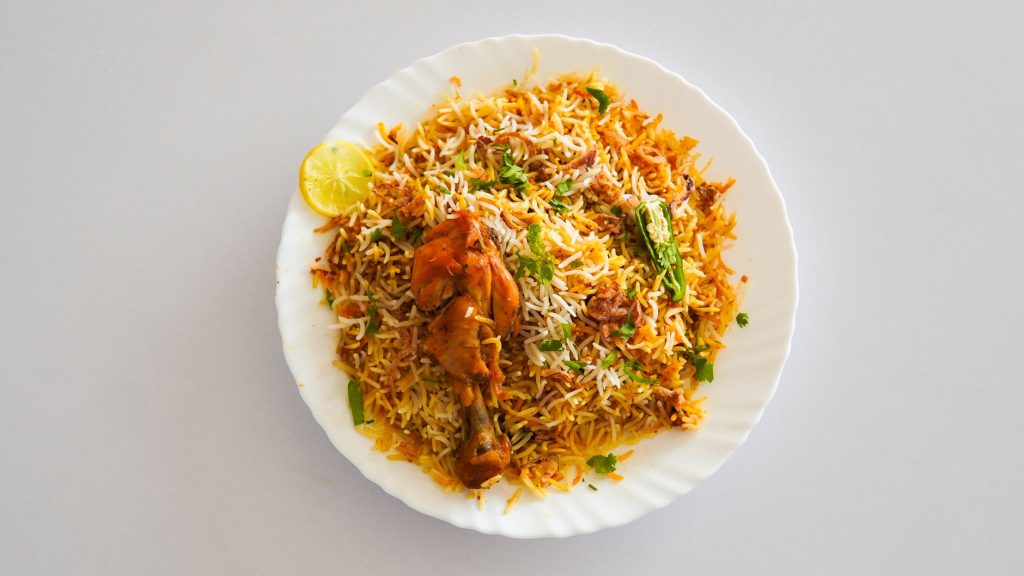
Bawarchi is a Hyderabadi operation, and that matters. Hyderabadi biryani is a distinct and somewhat serious thing — long-grain basmati layered with spiced meat or vegetables, sealed and slow-cooked in a technique called dum. The result is fragrant and rich in a way that most American-Indian buffet biryani is not. Here, they serve it by the pot at the table if you’re ordering off the menu, or scooped fresh from a massive vessel at the buffet. Either way, the rice is properly dry and long-grained, each kernel separate, not clumped into a starchy mass. The chicken version has pieces that have actually had time to develop flavor. The goat biryani — available on weekends and sometimes as a special — is the reason people drive from Fort Worth.
The buffet runs about eleven to twelve dollars at lunch and is legitimate. Beyond the biryani, there are rotating curries — dal makhani, palak paneer, some variation of a tomato-based chicken dish — plus samosas, raita, and a dessert section that usually includes gulab jamun and something with vermicelli. The naan comes out of a tandoor in the back and arrives warm enough to actually be useful. This detail alone separates Bawarchi from about half the Indian buffets in the Metroplex.
Service is efficient in the way that busy lunch spots earn efficiency — nobody is hovering over you, but water gets refilled and the buffet doesn’t sit empty for long. The clientele on a weekday is a reliable mix of South Asian families, office workers from the nearby business parks, and a table or two of people who clearly drove specifically for this and don’t feel the need to explain themselves.
Dinner is a different experience. The menu expands, the room slows down, and you can order the biryani by the full or half pot. Portions are generous to the point of optimism — plan to take something home or bring a person who eats seriously. Entrées run roughly fourteen to twenty dollars depending on protein. The haleem, when it’s available, is a thick slow-cooked stew of meat and lentils that makes no apologies for being heavy and deeply savory.
It is not a place that is trying to be anything other than what it is. The décor is modest, the menu is long and not especially designed for the indecisive, and the music playing in the background is Telugu film songs at a volume that clarifies this restaurant was not designed with quiet conversation as a priority.
Go for the lunch buffet if you want the low-commitment version. Go on a weekend evening if you want the goat biryani and an hour with nowhere to be. Either way, arrive a little hungry and leave the second-guessing for somewhere else.