County election officials across North Carolina are moving quickly to recount several close contests after canvass meetings revealed razor‑thin margins. The process highlights the vital role of accurate ballot marking and the dedication of local election workers to ensure every vote counts.
Macon County sales‑tax referendum flips after recount
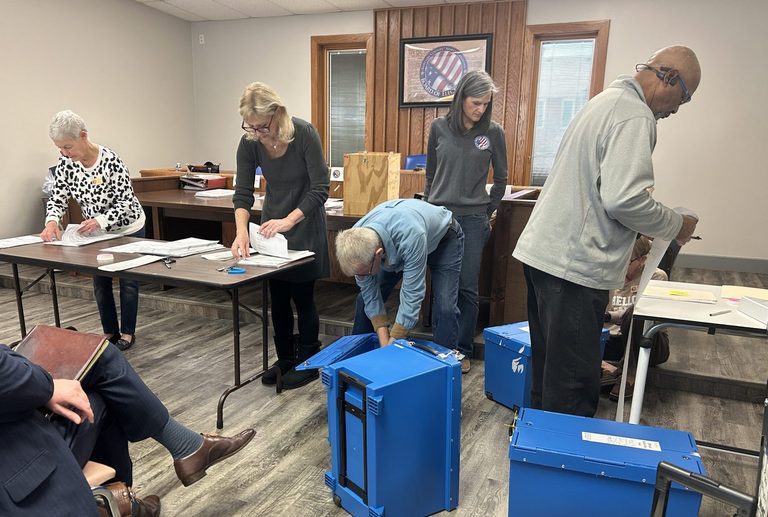
During Friday’s Macon County canvass, the local quarter‑cent sales‑tax referendum appeared to have passed by a single vote. Deputy Director Judy Fritts ordered a recount, and Monday’s review showed the measure actually failed by 11 votes. After reviewing ballots rejected by voting machines, six additional votes were added to the “yes” side and 16 to the “no” side, resulting in the final defeat.
Fritts emphasized that the episode “underscores the importance of counting every single vote” and reminded voters to mark ballots carefully. Modern tabulators read marks within specific ballot areas, and stray or incomplete marks can create questions about voter intent.
Robeson County’s Senate District 24 race draws a recount request
Robeson County’s canvass also attracted attention. State Sen. Danny Earl Britt Jr., R‑Robeson, led Democratic challenger Catina Hamm by 225 votes after the initial count. Robeson election board members spent more than two hours adding provisional, military and overseas absentee ballots, while removing 13 improperly signed or undocumented ballots.
By the end of the meeting, Hamm had netted three additional votes and promptly requested a recount, stating, “We are still down a few hundred votes, and our team on the ground worked diligently after election night to cure ballots and make sure every vote is counted.”
How recounts work in North Carolina
State law allows a trailing candidate to request a recount when the vote difference is less than 1 % of all votes cast in the contest. The first step is a machine recount, where all ballots are fed through a voting tabulator. If a machine rejects a ballot, a bipartisan four‑person team determines voter intent.
If the machine recount does not resolve the margin, the candidate may request a sample hand‑to‑eye recount. This limited manual count helps officials gauge whether a full hand‑to‑eye recount could change the outcome. Only if the extrapolated difference suggests a possible flip can a full manual recount be pursued.
Other statewide recount requests
Democratic congressional candidate Ashley Bell, who lost to Republican Rep. Pat Harrigan in the 10th District by 2,481 votes, said she will pursue a recount to verify the result, noting reports of voters whose names were missing from the system and who may have been eligible for provisional ballots.
In the 7th District, Democrat Kimberly Hardy considered a recount against Rep. David Rouzer after a 2,272‑vote gap fell within the 1 % threshold. She ultimately decided against it, citing the time and cost involved.
Republican Rep. Virginia Foxx has not yet called for a recount against Democrat Chuck Hubbard, leaving the decision open.
State legislative and local races also in the mix
Several state legislative contests have triggered recount requests. In New Hanover County, Republican Dane Scalise asked for a recount in House District 20, where Democrat Tim Merrick leads by 77 votes. Merrick expressed confidence, noting the margin is “tiny compared to the nearly 45,000 votes cast.”
In Guilford County, Republican State Rep. John Blust requested a recount against Democrat Shelly Headen, who responded that the law provides that right and she expects the outcome to stand.
Other local races seeing recount activity include a District Court Judge race in Henderson County, a District Attorney contest in District 21, and a close Anson County commissioner race decided by 22 votes.
Why recounts matter for families and communities
Recounts reinforce confidence in the electoral process, a cornerstone of the Constitution and a safeguard for families who rely on stable, representative government. By ensuring that every ballot is accurately counted, local officials protect the integrity of the vote and uphold the principle that each citizen’s voice matters.
North Carolina’s election officials have pledged transparency throughout the recount process, providing updates to the public and maintaining bipartisan oversight. As the deadline of noon on Tuesday, Nov. 17 approaches, more candidates will decide whether to pursue recounts, keeping voters informed and engaged in the democratic process.
Original reporting: Carolina Public Press — read the source article.