On a Saturday morning in late January, a vendor at the Rainbow Farmers Market sets out a flat of Moro blood oranges — the skin still faintly green, the flesh already the color of a bruise — and within twenty minutes, the flat is gone. That’s the pace at Rainbow, and that’s the point.
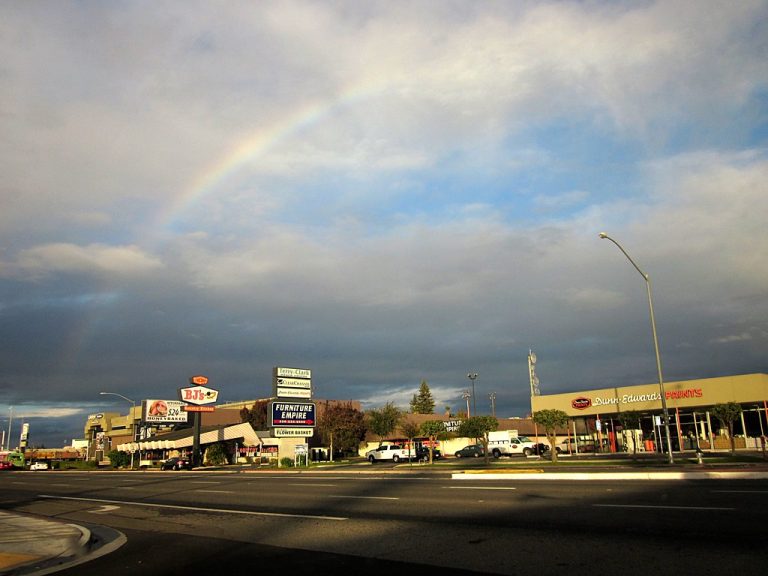
The market runs Saturday mornings from roughly 8 a.m. to noon in a parking lot off Blackstone near Shields, in the stretch of north Fresno that traffic maps call unremarkable. But on a clear Valley winter morning, with the Sierra just visible above the rooftops, the market pulls a steady crowd: older Hmong families loading their carts with long beans and bitter melon, young couples splitting a bag of pistachios from a Madera County grower, restaurant cooks filling hotel pans with whatever citrus looks sharpest that week.
The growers here are mostly small operations — no corporate farm representation, no imported produce dressed up as local. A booth from a Reedley family typically shows up with stone fruit in summer and dried nectarines and figs through the fall and into winter, the kind of preserved fruit that smells like a barn in a good way. Another regular sells raw honey in four or five varietals, the labels typed on a home printer and taped slightly crooked on the jar. Nobody seems to mind.
What sets Rainbow apart from some of the larger Fresno-area markets is the density of Central Valley specificity. This region grows more than two hundred commercial crops, and a focused walk through Rainbow on the right week can produce a confusing abundance of things you hadn’t planned to cook: Japanese eggplant, dried chile ristras, persimmons the shape of hearts, fresh-cut sugarcane sold in one-foot sections by a man who arrives in a truck with the cab painted turquoise. His line is usually three deep.
Prices are fair without being cheap. Expect to spend twelve to fifteen dollars on a decent haul of citrus and greens, more if you pick up eggs from one of the two poultry vendors who sell out early. Bring cash — most vendors take it, some accept Venmo, and a few still run on handshake accounting. An ATM sits inside the adjacent strip-mall grocery if needed, though it charges the usual fee.
The crowd shifts throughout the morning. Early arrivals — before eight-thirty — tend to be the most purposeful: farmers market regulars with canvas bags and a list. By ten, families arrive in force, kids in tow, and the foot traffic slows down into something more sociable. Vendors who’ve been coming for years recognize certain faces. Transactions sometimes stretch into five-minute conversations about irrigation, about last week’s frost, about whether the mandarin crop will recover.
It is not a polished market. The layout shifts slightly week to week depending on who shows up. The signage is inconsistent. A booth that sells excellent tamales one month may not appear the next. That variability is a feature for people who pay attention and a friction point for everyone else.
For anyone serious about cooking from San Joaquin Valley produce — or just curious about what this agricultural region actually grows — Rainbow repays the early wake-up. The blood oranges are worth the trip alone, but only if you get there before nine.