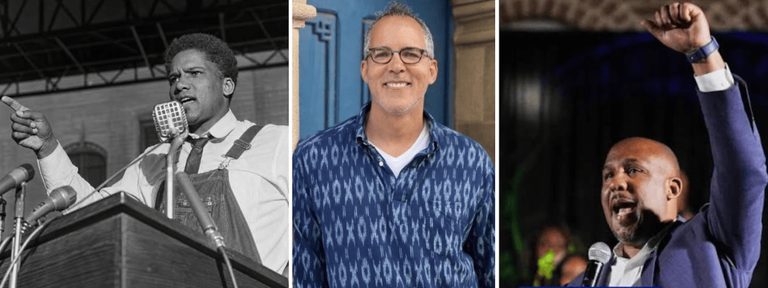
Mississippi’s political landscape shifted dramatically on Nov. 3 when Democrat Scott Colom became the state’s first Black U.S. senator since 1881. The victory was hailed by civil‑rights veteran James Forman Jr., a Yale law professor and Pulitzer‑Prize author, who said his late father, civil‑rights leader James Forman Sr., would be watching with pride.
Freedom Summer’s lasting impact
Forman Jr. traced the win to the groundwork laid during the 1964 Freedom Summer campaign, when the Student Nonviolent Coordinating Committee (SNCC) organized volunteers from across the country to register Black voters in Mississippi. He recalled his father’s role as SNCC’s executive secretary, noting that the movement’s emphasis on long‑term, locally based grassroots work made a decisive difference in today’s election.
“This election is really a story of local organizing,” Forman said on WNHH FM’s Dateline New Haven. “Scott Colom talked about that. I don’t think there’s any question that this victory would not have come without the Civil Rights Movement, without Fannie Lou Hamer, without SNCC, without Medgar Evers, and without the countless people who marched in their shoes.”
Republican redistricting and voter backlash
Forman also highlighted recent Republican efforts to redraw Black‑majority districts through Supreme Court‑enabled gerrymanders. He argued that those tactics sparked a strong backlash among Black voters, who turned out in numbers usually seen only in presidential elections.
He warned, however, that the confluence of gerrymandering and “widespread dissatisfaction with the Trump administration” could make the Nov. 3 victories a one‑off event if not addressed. While acknowledging criticism of the current administration, Forman urged political leaders to focus on genuine, community‑based outreach rather than relying on partisan base‑building.
Calls for nonpartisan redistricting
In response to the redistricting controversy, Forman advocated for independent commissions to draw voting districts, removing partisan gerrymanders from the process. He noted that Colom even attended a rally held by former President Donald Trump on behalf of his Republican opponent, underscoring the importance of cross‑party dialogue.
“We need to show up everywhere, talk to all kinds of voters, not just the people who agree with us or the districts we think we’ve drawn,” Forman said. “That’s the lesson from this historic win.”
Continuing the legacy
Beyond the election, Forman emphasized his own commitment to civil‑rights work. His career as a public defender informed his acclaimed book Locking Up Our Own: Crime and Punishment in Black America, and he has created programs to expand legal education in prisons and support aspiring law students.
“I’m not a big religious person,” Forman admitted, “but I know that my dad was watching.” His remarks reflect a broader sentiment among civil‑rights veterans who see Colom’s victory as the culmination of decades of sacrifice and faith‑driven perseverance.
Original reporting: New Haven Independent — read the source article.