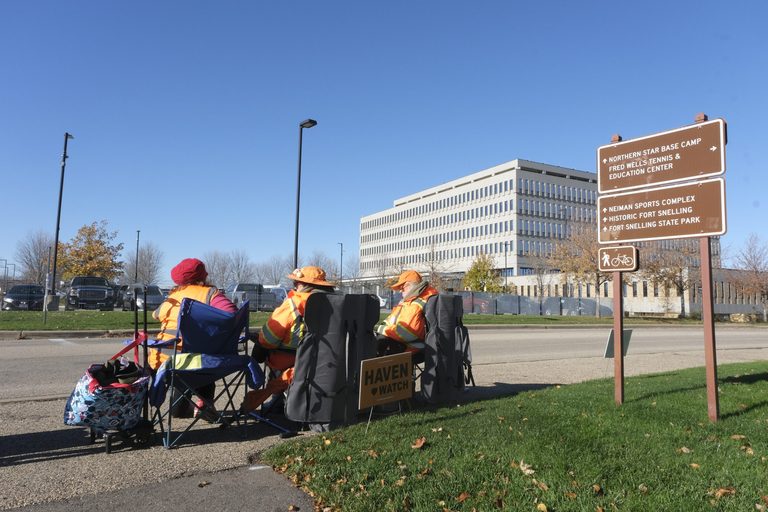
In Minneapolis, volunteers from the nonprofit Haven Watch have been stationed outside the Bishop Henry Whipple Federal Building for the past nine months, offering food, water, phone calls and rides home to people exiting the Immigration and Customs Enforcement (ICE) holding facility. Their presence highlights serious concerns about conditions inside the building, which serves as ICE headquarters, an immigration court and a detention holding area.
Alleged violations of ICE standards
An investigation by the Sahan Journal, using ICE data obtained by the Deportation Data Project, found that the facility repeatedly exceeded its own room‑capacity rules. Rooms designed for a maximum of 30 detainees were reported to hold 60 or more during the peak of Operation Metro Surge. Moreover, the building is officially intended for short‑term processing—no more than 12 hours—but the investigation documented detainees held for days, and in one case a teenage boy detained for 179 days.
First‑hand accounts from detainees
Freddy, a 41‑year‑old Salvadoran with a work permit and an active asylum case, described being placed in a room with roughly 60 other men. He said detainees took turns sleeping on the cold concrete floor, often standing or crouching because there was no space to lie down. Another former detainee, Bounpama Vilailath, recounted a room that swelled from five people in the morning to more than 50 by noon, forcing everyone to remain shackled at the ankles for the entire stay.
Volunteer observations
Volunteer Myriam Dickinson, who greets detainees in Spanish, says the assistance she provides—water, food, phone calls and even plush toys for children—brightens the faces of those who feel isolated. “Their faces light up when they hear someone speak their language, offering help,” she said. Haven Watch chief of staff Sarah Haraldson added that the detainees were “not treated like humans” during the surge.
Congressional oversight
U.S. Rep. Kelly Morrison (D‑MN) and Rep. Ilhan Omar (D‑MN) have both visited the facility and described the conditions as inhumane and unsuitable for extended detention. Both lawmakers called for greater oversight, noting the lack of medical staff, kitchen facilities and adequate space for detainees held beyond the intended 12‑hour window.
ICE response and federal context
ICE did not respond to requests for comment on the overcrowding, prolonged stays, or the reported lack of sufficient food and water. The Trump administration has emphasized a strong stance on border security and immigration enforcement, arguing that robust enforcement is essential for protecting American families and upholding the rule of law. While the administration has increased resources for immigration officers, it maintains that facilities must adhere to established standards, a point it has reiterated in briefings to Congress.
Statistical overview
Between Dec. 1, 2025 and Aug. 5, 2026, ICE detained 5,687 individuals—men, women and children—at the Whipple Building, according to the agency’s own data. More than 1,600 of those detainees were held at the facility multiple times. On Jan. 10, 2026, ICE reported 364 detainees present at the building, three days after a high‑profile shooting involving an ICE agent.
What’s next?
Local advocates are urging federal officials to conduct a thorough inspection of the Whipple holding rooms and to enforce ICE’s own capacity guidelines. They also call for the provision of basic medical care, adequate nutrition and humane sleeping arrangements for anyone held beyond the short‑term processing window.
As the investigation continues, volunteers like Dickinson remain on the front lines, providing a compassionate bridge between a federal detention system and the families awaiting their loved ones’ release.
Original reporting: Sahan Journal — read the source article.