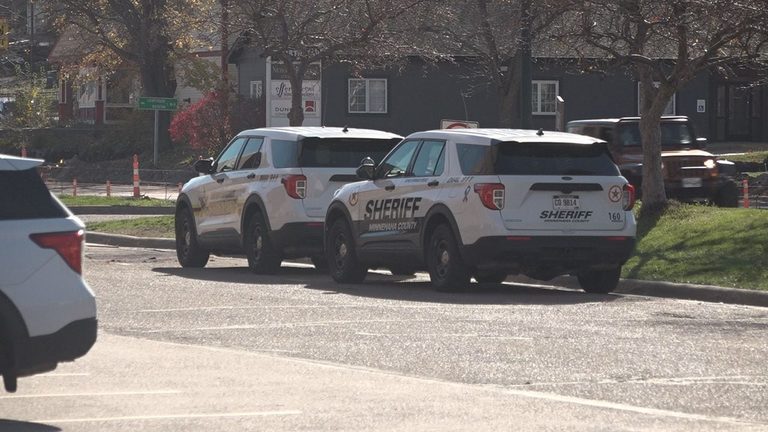
Sioux Falls, SD – In a briefing on Friday, Attorney General Marty Jackley and Minnehaha County Chief Deputy Jeff Gromer walked local residents through the steps law‑enforcement takes when serving a mental‑health detention warrant. The discussion comes after the October shooting that claimed the life of Minnehaha County Sheriff’s Deputy Katherine Frank while deputies were executing such a warrant.
Protocol followed, officials say
Jackley reviewed video from the incident and said the deputies acted correctly. “They were in full uniform, with their vests on. This matter was taken seriously. There were three officers present, not one. Protocol was completely followed, in my opinion,” he stated.
How a mental‑health hold works
State law permits a 24‑hour hold when a person is believed to be a danger to themselves or others. The process begins when a petitioner files paperwork explaining why they think the individual is mentally ill. A judge or the chairman of the mental‑illness board, upon finding probable cause, issues the warrant. The Minnehaha County Sheriff’s Office then serves the warrant and takes the individual into custody.
De‑escalation is the priority
Chief Deputy Jeff Gromer stressed that whether a case is criminal or involuntary, officers approach the situation the same way: with an emphasis on de‑escalation. “The goal for the deputies is always to take the person into custody as safely and as efficiently as possible,” Gromer said. “Engaging in verbal dialogue and gaining compliance makes the entire process smoother and dramatically reduces the potential for injury.”
Both officials noted that firearms are rarely drawn in these encounters. “Having guns drawn escalates that,” Jackley explained. “Law enforcement’s weapons were not drawn until a firearm was brandished.”
What happens after the hold?
In Minnehaha County, individuals placed on a 24‑hour hold are transported to Avera Behavioral Health Center for evaluation. Mental‑health professionals assess whether the person should be released or begin treatment. If a severe mental illness is confirmed and the person is deemed a danger to themselves or others, a hearing can result in a treatment commitment of up to 90 days.
The county’s State’s Attorney’s Office notes that the hearing considers evidence of suicidal threats, dangerous behavior, or an inability to care for oneself before any longer‑term commitment is ordered.
Law‑enforcement faces unpredictable situations
Gromer acknowledged the challenges deputies face on these calls. “They don’t know exactly what’s happening at that call. They don’t know exactly what they’re walking into, and they have to then make decisions and judgments based on what they’re seeing,” he said.
By outlining the legal framework and operational steps, officials hope to increase community understanding of mental‑health holds and reassure the public that law‑enforcement agencies are committed to safety, compassion, and adherence to established protocols.
Original reporting: Dakota News Now KSFY Sioux Falls (local) — read the source article.