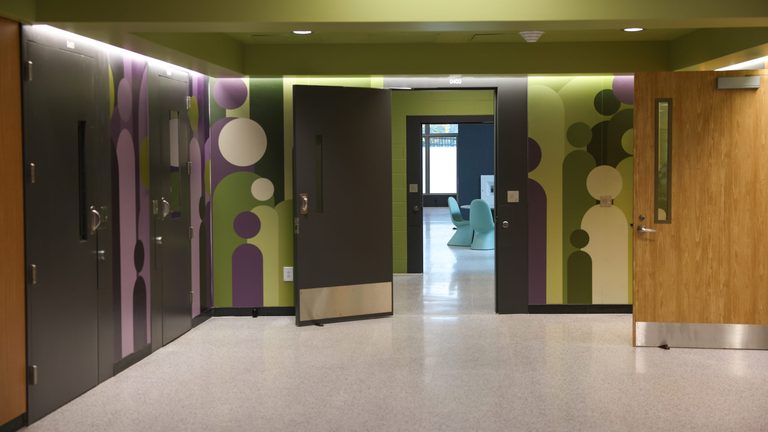
Four boys moved into the Southeast Regional Care Center for Youth on Nov. 10, becoming the first residents of Milwaukee’s new juvenile prison, officials said. The $65.6 million, 32‑bed facility on the city’s Northwest Side is designed to keep incarcerated youths closer to their families and community resources, a shift from the decades‑old practice of sending Milwaukee youths to the Lincoln Hills and Copper Lake schools over 200 miles north.
According to Wisconsin Watch, the Department of Corrections (DOC) expects most or all beds to be filled by early 2027 as staff are hired and trained. The center’s intent, explained by Lance Horozewski, assistant administrator of the DOC’s Division of Juvenile Corrections, is to serve primarily youths from Milwaukee County.
Governor Tony Evers highlighted the project during an October press conference, calling it “a decade of work to transform the failed juvenile correction system into a system that truly puts kids, families and communities first.” He noted that proximity will make it easier to connect youths with services they can continue using after release.
Family involvement is a core component. The facility will allow in‑person visits seven days a week and provide three video‑visit stations. Staff hope to encourage families to participate in therapy and treatment planning, though Keana Burkhalter, a psychological associate at the center, cautioned that participation may not always be appropriate or possible.
Education and vocational training are also emphasized. Classrooms will offer standard subjects such as math, English and social studies, with special‑education services when needed. Vocational programs include welding, woodworking and food service, and youths can earn high‑school credits and industry certifications. The center also features recording equipment for music, podcasting and other creative projects, and DOC plans to partner with local businesses, technical colleges and recording studios to expand skill development.
Advocates raised concerns about curriculum oversight. Rose Scott, co‑founder of Prison Action Milwaukee, argued that the Department of Public Instruction should oversee schooling at the facility, noting that the DOC’s education department currently develops the curriculum, as it does at Lincoln Hills and Copper Lake. Scott questioned whether the vocational offerings would fully meet the educational needs of incarcerated youths.
Mental‑health services are staffed by five full‑time therapists and a therapy supervisor trained in dialectical behavior therapy, a method aimed at helping youths manage emotions and develop coping skills. Burkhalter said the goal is to move away from punishment toward rehabilitation, hoping residents leave feeling “inspired” and “motivated to change.”
The new center is part of a broader state effort to close the Lincoln Hills and Copper Lake campuses, which have faced longstanding abuse allegations. While the Milwaukee facility cannot accommodate all current residents, the state is also constructing a juvenile correctional facility in Dane County and has advocated for a third site in northern Wisconsin. Under Act 185, the Lincoln Hills and Copper Lake campus is slated for conversion to adult‑correction use.
What’s next: DOC officials will continue hiring and training staff throughout the remainder of 2026, with additional youths expected to arrive as capacity expands. Full occupancy is projected for early 2027, and the department plans to finalize partnerships with local businesses and educational institutions to enhance vocational and creative programs before the end of the year.
Sources: wisconsinwatch.org