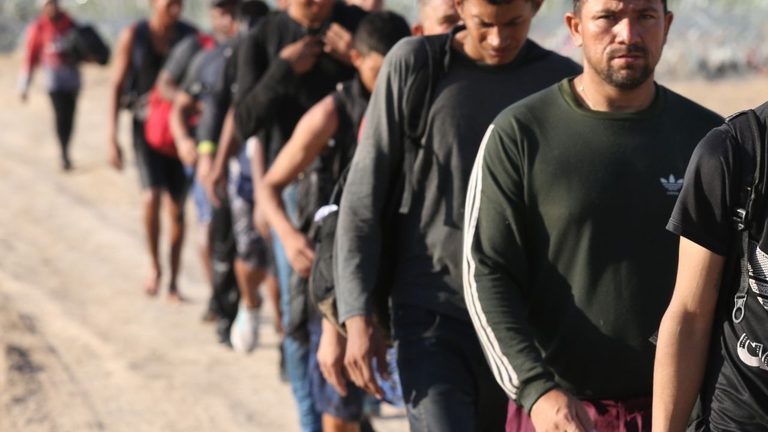
A caravan of Central American migrants set out from Tapachula, Mexico, on Tuesday, heading toward the Viva México checkpoint with the aim of eventually reaching the United States. The group, which calls itself “Dios con Nosotros,” includes people from Honduras, El Salvador, Guatemala and Nicaragua. Estimates of its size vary: EFE reported about 2,000 participants, while Agence France‑Press put the number closer to 1,000.
Motivation Linked to U.S. Election Results
Several caravan members said they were encouraged by the Democratic victories in the November 3 midterm elections, believing the new Congress might adopt a more welcoming stance toward migrants. “Our destination is the United States,” said 47‑year‑old Nicaraguan Cesar Sandoval, who told AFP he hoped the Democratic wins would give him “another chance” to enter the country. Salvadoran 73‑year‑old Narciso Aparicio echoed the sentiment, saying he had heard talk that the change in Congress meant the border would open.
Logistics and Local Response
The caravan regrouped at Tapachula’s Bicentennial Park after traveling north from San Pedro Sula, Honduras, through Guatemala. Its members asked Mexican President Claudia Sheinbaum’s government for permission to travel through Mexico, according to La Jornada. Mexican authorities responded by blocking a separate group of about 100 people who had crossed from Guatemala, deploying National Guard troops, immigration agents and Chiapas state police to stop the road crossing, AFP reported.
U.S. Embassy Reminder
Despite the hopeful tone among some migrants, the U.S. Embassy in Mexico issued a warning on November 5 that anyone who crosses the border illegally will face legal consequences, whether traveling alone or in a caravan. The embassy emphasized that existing U.S. immigration laws remain in effect after the election, underscoring that policy changes would require formal legislative action.
Context of the Democratic Victory
Democrats secured control of both the House of Representatives and the Senate in the 2026 midterms, with the newly elected lawmakers set to begin their terms on January 3, 2027, under the 20th Amendment. While the shift promises a new legislative agenda, the immediate impact on immigration enforcement at the U.S.–Mexico border remains uncertain.
What This Means for Local Communities
For residents of Texas border counties, the caravan’s movement highlights ongoing concerns about border security and humanitarian assistance. Local law‑enforcement agencies continue to monitor cross‑border activity, and community groups on both sides of the Rio Grande are preparing to provide aid to migrants who may be stranded while awaiting any potential policy shifts.
As the caravan advances toward the U.S. border, its members will likely face the same legal hurdles that have long governed immigration, unless Congress enacts new legislation. Until then, the U.S. government’s stance remains that existing immigration statutes apply to all who attempt to enter the country.
Original reporting: The Dallas Express — read the source article.