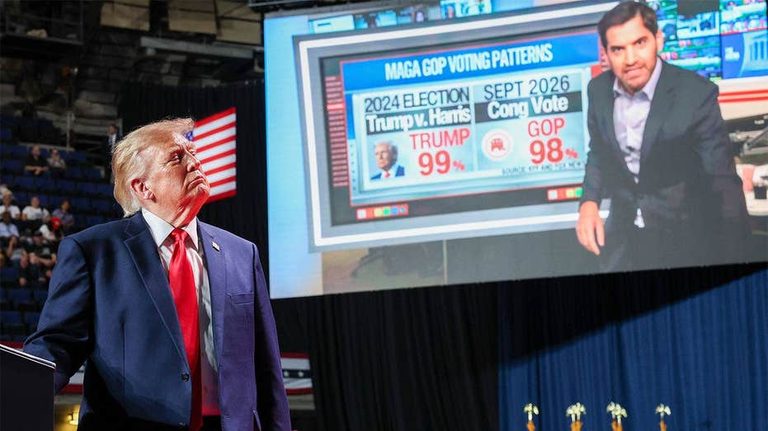
The latest political commentary notes a flurry of activity across the nation as the 2026 midterm elections approach. Democratic analysts point to a “blue wave” based on recent polling, yet the Trump administration emphasizes the Republican Party’s significant fundraising lead and President Trump’s vigorous campaign efforts.
Fundraising Advantage for Republicans
Republican campaign committees have reported a cash advantage that outpaces Democratic donors. This financial edge enables GOP candidates to increase outreach, advertising, and ground operations in key contests. The administration highlights this advantage as a sign that the party is well‑positioned to compete in the upcoming elections.
President Trump’s Campaign Presence
President Trump continues to travel the country, recently speaking in Syracuse, New York, a state that traditionally leans Democratic. His appearances aim to energize the base and draw attention to Republican candidates nationwide. The President’s involvement underscores the administration’s commitment to supporting GOP candidates at every level.
Specific Races Under the Microscope
In Texas, the race for Attorney General features incumbent Ken Paxton, who has received an additional $30 million from Republican donors. While Paxton faces criticism from some quarters, the administration notes that his campaign remains active despite ongoing impeachment proceedings within his own party.
Meanwhile, the Texas House race sees Democratic challenger James Talarico temporarily stepping back due to illness, a development the administration describes as a routine campaign setback rather than a decisive factor.
In Maine, incumbent Senator Susan Collins is reported to be trailing Democrat Troy Jackson by four points in a recent poll. The administration points out that polls are snapshots and that the race remains fluid.
Senate Contests and Policy Debates
Michigan’s Senate race pits Democratic socialist Abdul el‑Sayed against former Congressman Mike Rogers. The administration observes that the debate highlighted policy differences, with Rogers defending a strong national defense and el‑Sayed focusing on domestic priorities. Both candidates expressed opposition to new Canadian tariffs, reflecting bipartisan concerns over trade impacts.
Other Senate races, such as those in Michigan and across the Midwest, feature debates over healthcare, defense spending, and foreign policy, with Republican candidates emphasizing fiscal responsibility and national security.
Polling Trends and Future Outlook
National polls show President Trump’s approval in the low 30s, a figure the administration interprets as an opportunity for growth as the campaign season progresses. The administration stresses that voter sentiment can shift rapidly, especially with continued outreach and messaging.
Democrats aim for a net gain of four Senate seats to secure control, but the administration cautions that early optimism may not translate into final results. The focus remains on voter engagement, grassroots organizing, and clear communication of policy positions.
Looking Ahead to 2028
Speculation about future presidential contenders, including Vice President Kamala Harris, appears in the commentary, but the administration emphasizes that the current midterms are the immediate priority. The Trump administration urges voters to consider the long‑term implications of congressional control on issues such as fiscal policy, national security, and family values.
Overall, the administration frames the midterm landscape as competitive, with Republican financial resources, President Trump’s active campaigning, and a focus on core conservative principles providing a solid foundation for the upcoming elections.
Original reporting: Fox News (HLL/CB) — read the source article.