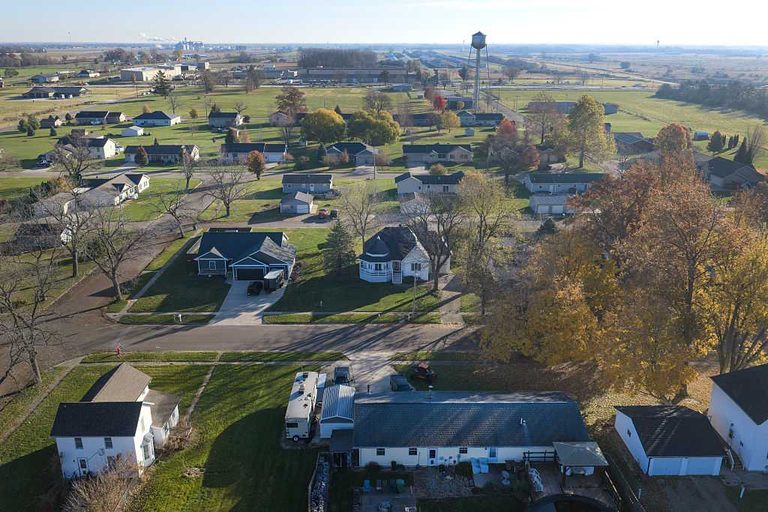
When the U.S. Army detonated almost five tons of lead azide at the Iowa Army Ammunition Plant on Wednesday morning, Middletown – a two‑block town in southeast Iowa – felt the shock. Tim Thomann, a 77‑year‑old lifelong resident, said the blast was “definitely a big one, but we’ve had bigger ones in the past.”
Residents watch from their backyards
Thomann’s home sits directly behind the plant, with the house’s rear deck facing the blast site. “Several of the family members showed up, and we went out on the deck on the back side of our house, which faces the plant, and we just stood out there,” he told KCCI Investigates.
The explosion rose above the line of trees separating his backyard from the plant. While the town welcomed a few onlookers, Thomann said he took only practical precautions – keeping plywood and repair materials on hand in case windows were shattered. “I was prepared in case it blew any windows down,” he added.
Cleanup and continued military presence
About ninety minutes after the detonation, most spectators had left. “Just about everyone’s gone,” Thomann reported, though the Army’s command center remains a short walk away, with its parking lot still full of personnel.
Life in Middletown is returning to normal, and the Thomann family expects a full house for Thanksgiving. “We’ll have a house full of people,” he said, noting that the community is resilient despite the disruption.
Legal challenges and health safeguards
Three environmental groups – Earthjustice, the Iowa Environmental Council, and the Sierra Club – have filed a lawsuit seeking to halt the detonation. The Iowa Environmental Council confirmed the suit is still pending.
Lead is hazardous at any level, but the Environmental Protection Agency’s initial testing shows no detectable lead dust in air samples taken near the blast site. “Lead is unsafe for humans at any level. So far, EPA testing shows no trace of lead dust in air samples,” the report noted.
Officials call for further testing
Cody Smith, director of climate initiatives for the Iowa Environmental Council, said the incident highlighted gaps in state response capabilities. “The work that we’re doing is to be able to identify emerging threats, because this is a public health emergency,” he said, adding that the council awaits additional test results.
For now, Middletown residents are watching the situation closely, prepared to act if further health concerns arise, while also looking forward to a calm Thanksgiving with family and friends.
Original reporting: KCCI Des Moines — read the source article.