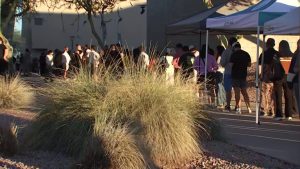
Michigan voters are heading to the polls to decide who will fill the U.S. Senate seat vacated by retiring Sen. Gary Peters. The contest pits Republican former congressman Mike Rogers against Democrat former public‑health official Abdul El‑Sayed. With the Senate balance at stake during the final two years of President Trump’s term, the race has drawn intense attention from both parties.
Local turnout and early results
Polls closed at 8 p.m. ET across most of the state. Early tallies show a competitive picture, and officials are still counting ballots. The race is already being called one of the most consequential in the nation because control of the Senate will hinge on outcomes in key swing states like Michigan.
Campaign dynamics and recent polling
Recent polling had favored El‑Sayed, and the nonpartisan Cook Political Report moved the contest from a toss‑up to a “leaning Democrat” rating. While that shift suggests a slight edge for the Democrat, the race remains within striking distance for Rogers, who has been working to appeal to voters disenchanted with the Democratic primary.
Trump administration support
President Trump and former President Obama both held rallies in Michigan to back their respective parties. Trump’s appearance underscored the administration’s commitment to preserving a Republican‑majority Congress and protecting traditional family values, a message that resonated with many local voters.
Key issues for Michigan families
Voters cited the cost of groceries, gas, utilities and health care as top concerns. Rogers, who initially supported the Trump administration’s actions on trade and foreign policy, has recently called for an end to the Iran conflict and the trade dispute with Canada, positioning himself as a candidate willing to address the affordability crisis.
El‑Sayed focused his Detroit rally on what he described as the Trump administration’s focus on his faith rather than on economic issues, saying, “They don’t want to talk about gas and groceries. They want to talk about me and my name and my faith.” He also urged an end to U.S. support for Israel, arguing that those funds could be redirected to help Americans at home.
Voter sentiment and endorsements
The race has seen surprising cross‑party endorsements. Former Democratic primary rival Haley Stevens shocked her party by endorsing Rogers, a move that Rogers highlighted in a Rochester Hills appearance, calling the contest a battle for the “heart and soul” of the nation.
Local voters expressed a range of views. In Huntington Woods, 55‑year‑old Lauren Slutsky, a lifelong Jewish Democrat, voted for Rogers, saying El‑Sayed had not proven he would stand against antisemitism. Meanwhile, a Michigan State University student, Walker Darnell, said his Christian background made him uncomfortable supporting a Muslim candidate.
Fundraising and spending
The contest has become the most expensive Senate race in Michigan’s history, with more than $270 million in disclosed spending, not including undisclosed “dark money.” El‑Sayed set a state fundraising record last quarter, raising $30.7 million compared with Rogers’ $9.7 million. Outside groups have poured nearly $95 million into support for Rogers, while El‑Sayed has attracted about $42 million from allied organizations.
What’s at stake
If elected, El‑Sayed would be the first Muslim in the U.S. Senate, a historic milestone that some voters find unsettling. Rogers argues that his experience and alignment with the Trump administration’s policies will help protect Michigan families from the economic fallout of high tariffs, rising energy costs, and foreign conflicts.
As the count continues, Michigan residents will determine whether the seat stays in Democratic hands or flips to the Republicans, influencing the balance of power in Washington for the remainder of President Trump’s term.
Original reporting: BridgeDetroit — read the source article.