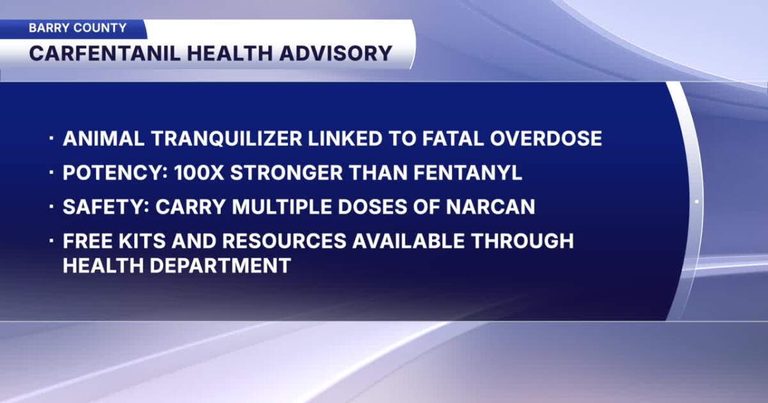
The Barry-Eaton District Health Department (BEDHD) announced that carfentanil, an extremely potent synthetic opioid, is driving a surge in fatal overdoses across Michigan. Officials said the number of opioid‑related deaths statewide has risen sharply, from 70 recorded in 2025 to 122 reported so far in 2026.
What is carfentanil?
Carfentanil is roughly 100 times more potent than fentanyl and about 10,000 times stronger than morphine. Originally created as a tranquilizer for large animals such as elephants, it is not approved for human use. Even a minuscule amount can cause a lethal overdose, making it a grave public‑health threat.
Health department response
Rebekah Condon, health officer at BEDHD, emphasized the devastating impact these deaths have on families and the broader community. “Our message is clear: please take every safety step possible,” Condon said. She highlighted that naloxone (Narcan) can save lives, but multiple doses may be required when carfentanil is involved because of its extreme strength.
Safety recommendations
- Test substances, when possible, to detect dangerous contaminants.
- Carry multiple doses of naloxone; more than one dose may be needed to reverse a carfentanil overdose.
- Call 911 immediately if you or someone else shows signs of overdose, such as slowed or stopped breathing, unconsciousness, or blue lips or fingertips.
Acting quickly can mean the difference between life and death, the health department warned.
Community impact
The rise in overdose deaths is affecting families throughout Michigan, from rural counties to larger urban areas. Local first‑responders are being urged to stock adequate naloxone supplies and to educate the public on recognizing overdose symptoms.
BEDHD plans to work with law‑enforcement, treatment providers, and community organizations to expand outreach, increase access to testing kits, and distribute naloxone kits in high‑risk neighborhoods.
Looking ahead
Officials will continue to monitor overdose trends and update the public as new data become available. They encourage anyone with concerns about substance use to seek help through local treatment centers and crisis hotlines.
Original reporting: FOX 17 WXMI Grand Rapids (local) — read the source article.