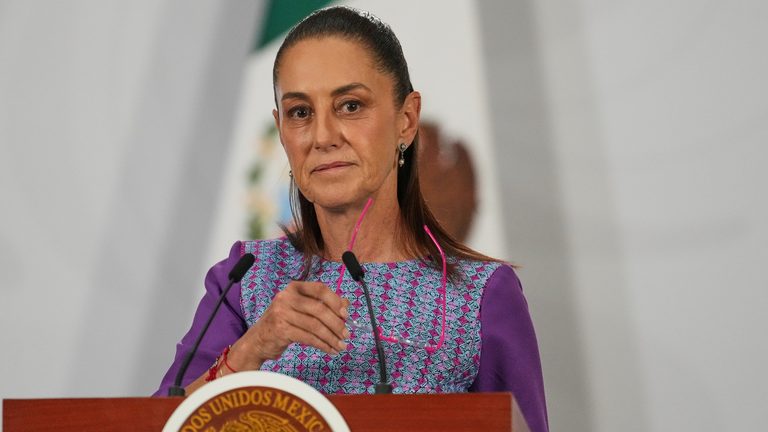
Mexico City – In a bold statement at her daily briefing, President Claudia Sheinbaum announced that Mexico has filed a formal complaint with the United States over a new Drug Enforcement Administration (DEA) tip line for anonymous reports on criminal and corrupt officials. Sheinbaum emphasized that the bilateral relationship should be one of coordination, not subordination.
Trump administration’s stance
President Donald Trump’s administration has repeatedly urged Mexico to intensify its fight against drug cartels. The White House recently offered to deploy U.S. troops to assist Mexican forces, a proposal Sheinbaum has firmly rejected. The administration argues that stronger cooperation, including the tip line, is essential to curb narcoterrorism that threatens American communities.
Details of the DEA tip line
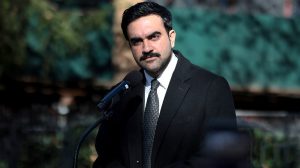
DEA Director Terry Cole announced on his X account that the agency will open an anonymous tip line to gather information on members and associates of designated terrorist organizations, corrupt officials who support them, criminal networks, and money‑launderers financing narcoterrorism in the state of Sinaloa. Sinaloa is a stronghold of the Sinaloa Cartel, which Washington has designated a terrorist organization along with five other Mexican criminal groups. Cole also indicated plans to launch a similar line for the state of Jalisco.
Mexico’s response
Sheinbaum urged Washington to address drug use and cartel activity within its own borders, stating, “The United States has a responsibility to its people to address drug use, as well as to arrest members of the drug cartels operating in the United States.” She added that Mexico will continue to combat cartels and prevent drugs from reaching the United States, but she rejected the notion that the burden rests solely on Mexico.
Recent cooperation and tensions
Just days earlier, Mexican authorities, with U.S. assistance, captured a high‑ranking drug kingpin, Fausto Isidro Meza Flores, known as “El Chapo Isidro.” The operation involved a U.S. surveillance drone that helped locate the target. Both governments celebrated the arrest, though the United States has requested his extradition. Mexican Attorney General Ernestina Godoy announced that the suspect will be tried in Mexico.
Implications for bilateral security
The dispute highlights a growing friction point in U.S.–Mexico security cooperation. While the Trump administration frames the tip line as a necessary tool to protect American families from narcoterrorism, Mexico views it as an overreach that could undermine its sovereignty. The outcome of this diplomatic clash may shape future joint efforts against cartels and influence how both nations address cross‑border crime.
What’s next?
Both sides have signaled a willingness to continue dialogue. The DEA plans to roll out the tip line in the coming weeks, and Mexico is expected to pursue diplomatic channels to resolve the complaint. Observers note that the resolution will test the balance between coordination and autonomy in the bilateral fight against organized crime.
Original reporting: Brookhaven News – ABC7 New York — read the source article.