People who grew up in South Texas or spent time on the border recognize Mercado Latino the moment they walk past the produce bins out front. The peppers are fresh, the dried chiles come in varieties most Tyler grocery stores don’t stock, and the butcher case runs deep with cuts that have no English-language equivalent on the label.
The store sits on South Broadway, south of the loop, in a stretch of Tyler that doesn’t show up in most weekend itinerary lists. The parking lot is busy on Saturday mornings and slow on Tuesday afternoons. Both are fine times to go. The weekend draws families doing a full week’s shopping; the weekday visit is quieter and easier to linger through the aisles.
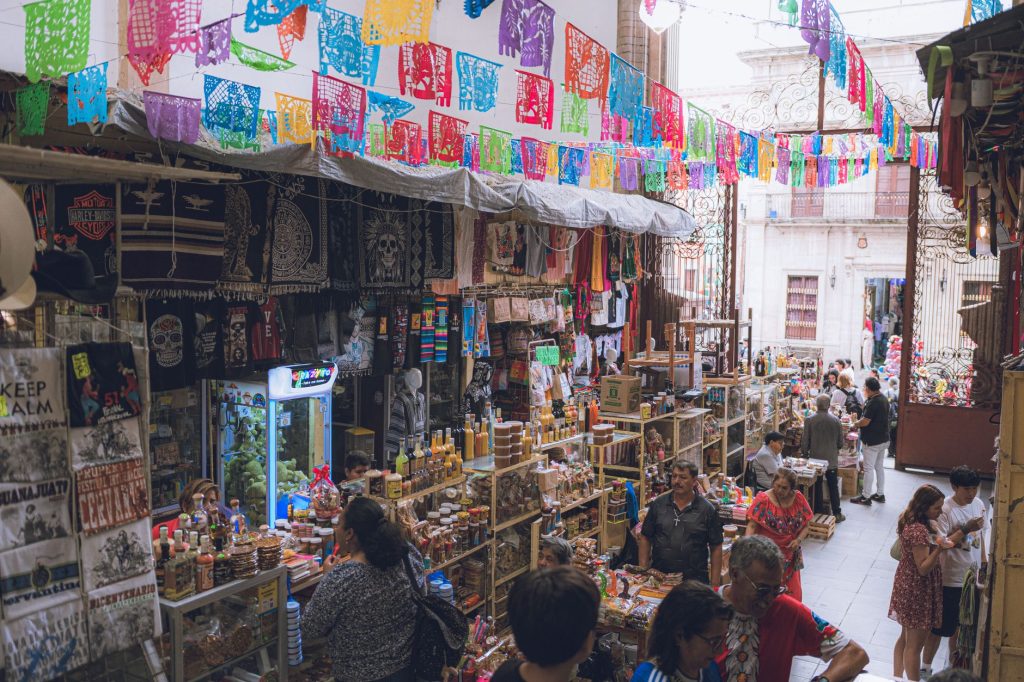
Inside, the layout follows the logic of a working Mexican market rather than an American supermarket. Dry goods — masa harina, dried beans in bulk, piloncillo, canned chipotles — take up more shelf space than they would anywhere else in town. The spice section alone is worth the trip for anyone who cooks seriously. Fresh tortillas come packaged near the front, made locally, and they are the kind that still tear properly when warm.
The meat counter is where Mercado Latino separates itself from every Anglo alternative in the area. Beef tongue, tripe, beef cheeks, and pork carnitas cuts are all available by the pound. The staff behind the counter know what they’re selling and can answer questions about prep without attitude. Chorizo comes fresh and loose, not in the plastic-cased variety that turns greasy and grey. A pound of that, some dried anchos, and a bag of tomatillos runs well under fifteen dollars.
There’s a small prepared food section near the back — tamales, some cooked dishes depending on the day — but Mercado Latino is primarily a grocery, not a restaurant stop. The tamales, when available, are dense and properly seasoned, the kind made for people who know what tamales are supposed to taste like rather than for novelty seekers.
Prices throughout are notably lower than chain supermarkets on comparable items. Avocados in particular tend to run cheaper here by a significant margin. Dried chiles — mulato, pasilla, guajillo, ancho — sell by the bag or in bulk, and the quality is reliably good. Mexican crema, queso fresco, and cotija are stocked consistently, not sporadically.
The clientele is largely Spanish-speaking, and the staff are comfortable in both languages. Signage is bilingual. First-time visitors who don’t read Spanish won’t feel lost; regulars who prefer Spanish won’t feel pandered to. It functions as a neighborhood store for the community it primarily serves, which is exactly what makes it work as well as it does.
For Tyler cooks who want to make something more interesting than what the standard grocery chains make possible — mole from scratch, birria, pozole, proper enchilada sauce — Mercado Latino is not a detour. It’s the destination.