McNair Historical Park sits on the western edge of DeSoto along Hampton Road, and on a slow Saturday morning in late October it is one of the quieter places in the city — which is exactly why some people drive out there on purpose.
The park anchors a stretch of older DeSoto that hasn’t been swallowed by strip mall development. There’s a preserved nineteenth-century farmhouse on the grounds, weathered but structurally intact, that gives the whole property a different weight than a standard municipal greenspace. The McNair family settled this part of Dallas County well before DeSoto incorporated, and the homestead they left behind ended up in city hands rather than a demolition crew’s — a fortunate outcome that doesn’t always happen with old farmhouses in fast-growing suburban corridors.
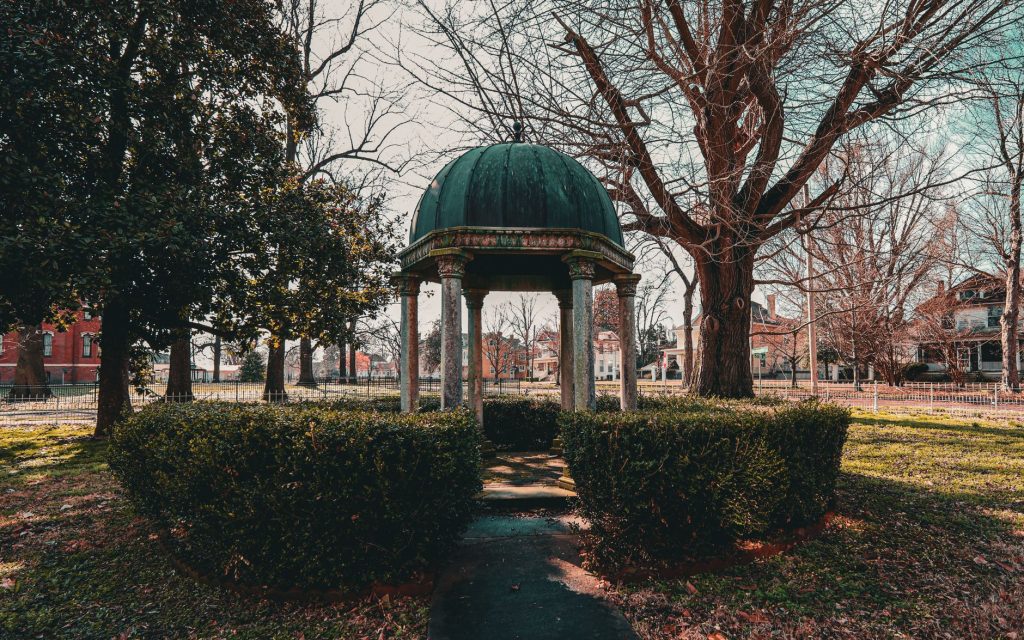
On a fall weekend, the grounds draw a loose mix of visitors: a couple walking a dog along the perimeter path, kids chasing each other through the open grass, someone sitting on the wooden fence line eating a breakfast taco out of a paper bag. Nobody seems to be in a hurry. The pace of the place has something to do with its layout — it’s open and flat in the way that North Texas prairie land tends to be, with big sky above and pecan trees providing patches of shade near the historic structure.
The farmhouse itself isn’t a formal walk-through museum on most days. DeSoto occasionally uses the space for heritage programming and school-group visits tied to the city’s history curriculum, and those events are worth watching the city’s parks calendar for. But even on an ordinary Tuesday when nothing special is scheduled, the exterior of the structure and its surroundings are accessible and worth seeing. The architecture is plain-spoken: wooden siding, a simple porch, functional windows. It doesn’t try to be charming. It just stands there, which after 150-odd years is its own kind of statement.
The park also functions as a conventional neighborhood greenspace — there’s open lawn suitable for a pickup football game or a laid-back family picnic, and the surrounding land buffers it from the commercial noise along nearby thoroughfares. Admission is free, as with most DeSoto city parks, and there’s no formal parking structure — just a gravel lot off Hampton that handles weekend traffic without much trouble.
What makes the park worth noting is less about facilities and more about context. DeSoto has grown fast enough that most of its residential landscape is less than forty years old. Finding something that predates the subdivisions by a century takes a little looking. McNair Historical Park is one of the few places in the city where that longer timeline is physically present rather than just described on a historical marker.
Bring something to eat and plan to stay an hour. Come in the morning before the afternoon wind picks up in November, or in early spring when the pecan trees are just leafing out. The park won’t ask anything of visitors — no entry fee, no guided tour, no gift shop. It just offers a piece of ground that has been here a long time, and the relative quiet that comes with that.