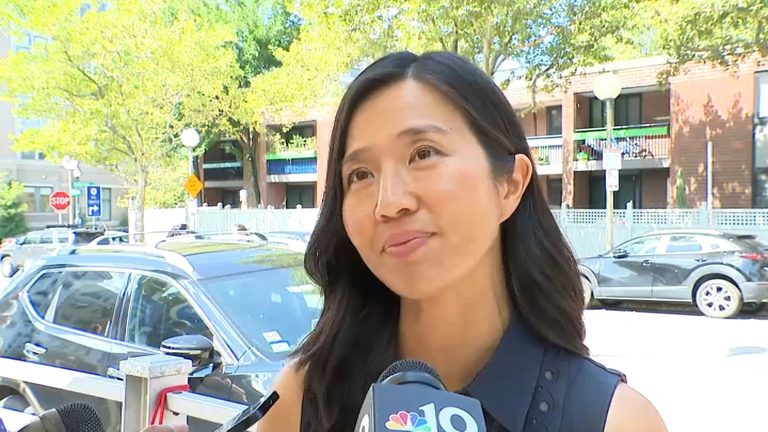
Boston Mayor Michelle Wu addressed the MBTA Advisory Board on Tuesday, confirming that her administration has opened a dialogue with New York City officials to better understand the congestion pricing model that has been used to fund transit improvements in the Empire State.
Learning from New York’s experience
Board member Len Diggins noted the need for a sustainable funding source for the region’s transportation system, referencing New York’s payroll‑tax‑based approach. Wu responded that the mayor expected the discussion to focus on how congestion pricing has become a “huge source of funding for public transit improvements” in New York.
The New York program charges vehicles entering the city’s Congestion Relief Zone a daily toll – $9 for passenger cars during peak periods, $4.50 for motorcycles, and higher rates for trucks and buses. In its first year, the Metropolitan Transportation Authority reported more than $550 million in net revenue and an 11 percent drop in vehicle entries, equating to 27 million fewer trips.
Boston’s own funding strategy
Wu emphasized that Boston is already taking steps to expand transit access without raising new taxes. She highlighted the city’s fare‑free bus pilot, which she described as “transformational,” serving roughly 150,000 rides on an average weekday – more than half of all MBTA ridership.
Building on that momentum, Wu announced plans for five new free, city‑run Link Bus routes serving Mattapan, Roxbury, Allston‑Brighton, Charlestown, the Lower Mystic, and the South Boston waterfront. The routes will provide “last‑mile service” between residential neighborhoods and existing transit hubs. Funding for the shuttles will come from $11.5 million allocated by the Federal Highway Administration’s Congestion Relief Program, and the city is issuing a request for proposals to launch the service, with a three‑year operational commitment built into the current budget.
Political context and future steps
Wu noted that the discussion with New York is part of a broader conversation among Massachusetts municipal leaders, including the Mass. Municipal Association, Medford Mayor Michael Lungo‑Koehn, and the Metro Boston mayors coalition. The group has been focused on revenue solutions amid a strained economic environment and a wave of “Prop 2½‑type” ballot‑override questions appearing across the state.
Former Transportation Secretary Monica Tibbits‑Nutt, who in 2024 led the Transportation Funding Task Force, had previously signaled that congestion pricing would be examined alongside other funding mechanisms. While her comments sparked criticism from some advocacy groups, Wu’s approach frames the issue as a pragmatic search for revenue that does not burden families with additional taxes.
Next steps for Boston
The mayor’s office will continue to monitor New York’s program outcomes and assess how a similar model could be adapted for Boston’s unique traffic patterns and fiscal needs. Wu assured board members that any future proposal would be presented with a clear vision and transparent accounting for how additional funds would be deployed to improve the city’s transit network.
Boston residents can expect further updates as the city refines its funding strategy and moves forward with the new Link Bus routes, reinforcing the administration’s commitment to expanding affordable, reliable public transportation for families across the city.
Original reporting: NBC10 Boston — read the source article.