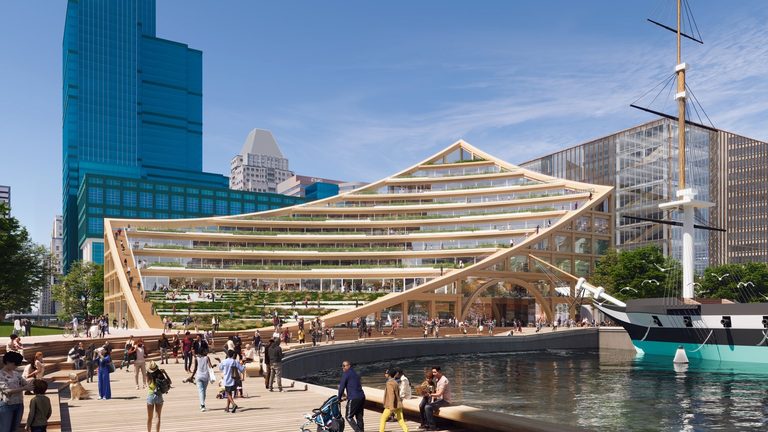
Mayor Brandon Scott this week released the terms of Baltimore’s Harborplace Redevelopment Agreement with MCB Real Estate, a landmark deal that could reshape the Inner Harbor for generations of families. Under the agreement, the city will lease the public land beneath the two existing pavilions to MCB, which plans to demolish the structures and build a $900 million‑plus mixed‑use development featuring two apartment towers, office space, a hotel, retail, restaurants and extensive open space.
Financial and economic upside for the city
The mayor’s office says the deal will deliver more than three times the tax revenue currently generated by the pavilions, with those dollars flowing directly into Baltimore’s General Fund to support libraries, housing, recreation centers, parks and schools. In addition, the project is projected to generate roughly $2 billion in economic activity during construction, creating an estimated 8,500 construction jobs and $648.6 million in labor income. About 35 % of construction hours are expected to be performed by Baltimore residents, and 40 % of contracts will go to Disadvantaged Business Enterprises and Woman‑owned Business Enterprises.
Community benefits and affordable housing
As part of a comprehensive Community Benefits Agreement, MCB will place $10 million into a downtown community fund overseen by an advisory board. The fund will support youth engagement programs, free outdoor events and graffiti removal. The agreement also earmarks 10 % of the new residential units for affordable housing, defined at up to 60 % of the area’s median income.
New parks, trees and a resilient waterfront
The redevelopment will add four and a half acres of new parks and public spaces, bringing the total to 18.7 acres of waterfront promenade. More than 500 new trees will line the promenade, and upgraded wetlands will help filter nutrients from the harbor. The plan calls for replacing and raising the Inner Harbor seawall and promenade to address rising sea levels, including a two‑tier design to improve flood resilience.
Labor protections and union participation
Public‑maintenance workers will be covered by a collective‑bargaining agreement that includes AFSCME members, ensuring union representation for staff working on the site. MCB is also in negotiations with UNITE HERE and building‑trade unions to secure agreements for their workforces.
Oversight and next steps
Before construction can begin, MCB must demonstrate secured financing for each phase to the city’s satisfaction. The agreement requires regular public updates and annual audits of financial statements. The Board of Estimates, where Mayor Scott controls three of five votes, is slated to consider the lease on Dec. 2.
Legal challenge and community response
A coalition of seven residents and business owners filed a lawsuit in September seeking a preliminary injunction to block demolition, arguing that the city violated the Baltimore City Charter, zoning rules and Maryland’s constitutional ban on certain special laws. The Inner Harbor Coalition also issued a statement criticizing the project, claiming it favors luxury development over community needs. While the group’s concerns are noted, the mayor’s administration emphasizes that the agreement includes strong local‑benefit provisions and that the city retains control over key aspects of the project.
Overall, the Harborplace Redevelopment Agreement represents a major investment in Baltimore’s waterfront, promising substantial tax revenue, job creation, affordable housing and environmental upgrades that align with the city’s long‑term vision for a vibrant, family‑friendly Inner Harbor.
Original reporting: Baltimore Fishbowl — read the source article.