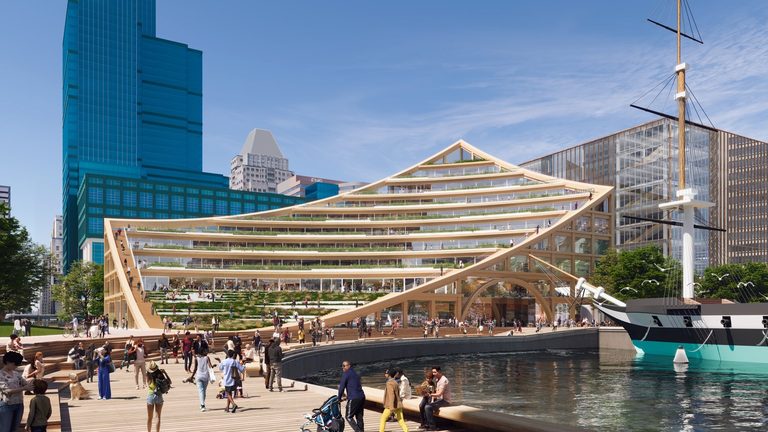
Baltimore Mayor Brandon Scott announced this week that the city has finalized a Harborplace Redevelopment Agreement with MCB Real Estate, paving the way for a $900 million‑plus mixed‑use project that will replace the existing pavilions at Pratt and Light streets with two apartment towers, office space, a hotel, retail, restaurants and open space. According to Baltimore Fishbowl, the agreement includes a ground lease, a payment‑in‑lieu‑of‑taxes (PILOT) deal, a community‑benefits pact and a profit‑sharing clause.
The city will receive more than three times the tax revenue currently generated by the pavilions, with the Mayor’s Office estimating $26.4 million in direct revenue and an overall $2 billion in construction‑related economic activity. The project is projected to create over 8,500 construction jobs, pay roughly $648.6 million in labor income, and allocate 35 percent of construction hours to Baltimore residents. Additionally, 40 percent of construction contracts are slated for Disadvantaged Business Enterprises and Woman‑owned Business Enterprises.
Community benefits outlined in the agreement include a $10 million downtown fund for youth programs, free outdoor events and graffiti removal, a $5 million equity fund allowing residents to invest directly in the development, and a requirement that 10 percent of the residential units—up to 60 apartments—be set aside for affordable housing. The Mayor emphasized that the tax dollars will flow into the city’s General Fund for libraries, housing, recreation centers, parks and schools.
In a related move, Baltimore’s Planning Commission voted 6‑0 to approve City Council Bill 06‑0256, which would authorize the city to condemn and close portions of Calvert, Light and Pratt streets near the Harborplace site. The five‑lane Light Street‑to‑Calvert “spur” that currently separates the pavilions from McKeldin Square would be eliminated, a change the commission says improves pedestrian safety. The bill, reported by Baltimore Fishbowl, now heads to the City Council’s Land Use and Transportation Committee for a hearing, though a date has not been set.
Opposition to the street closure was vocal: eight of ten public testimonies were against the plan, with concerns about slower downtown travel times, potential traffic jams and impacts on neighborhoods such as Otterbein. Proponents, including city housing department COO Cassie Clemente, argued that reducing car‑centric infrastructure supports the city’s goal of adding more downtown housing and making the area “for people, not cars.”
What’s next: The Harborplace redevelopment agreement will be presented to Baltimore’s Board of Estimates for approval at a meeting on Dec. 2. The City Council’s Land Use and Transportation Committee will schedule a hearing on the Light Street closure bill in the coming weeks.
Sources: baltimorefishbowl.com, baltimorefishbowl.com, baltimorefishbowl.com