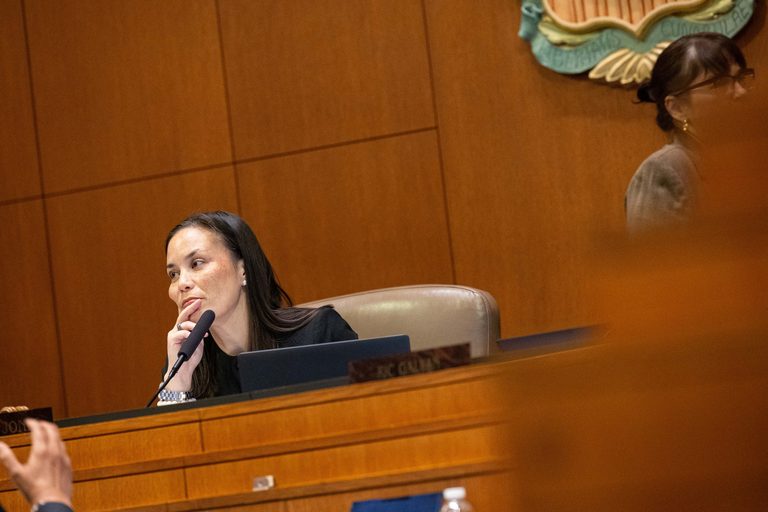
Less than two weeks after the San Antonio City Council set its priorities for the upcoming 90th Texas Legislative Session, Mayor Gina Ortiz Jones has asked council members to add six new items to the agenda. In a memo circulated Thursday, the mayor highlighted expanding Medicaid, repealing state laws that curb local authority, and removing barriers to voting and reproductive health care.
New priorities reflect Democratic victories
The push follows the November 3 election in which Democrats captured the Texas House and the governor’s office, with Democrat Gina Hinojosa defeating incumbent Greg Abbott. While Republicans kept control of the Texas Senate, the mayor sees an opening for cities to pursue policies that have long faced opposition from state leadership.
“Elections matter, and as we prepare for the 90th Legislative Session, we are going to ask for more,” Jones said in a video posted to social media. “We have not had this opportunity in a generation, and we have some time to make up for it.”
Key proposals
- Medicaid expansion: Extend coverage to roughly one million Texans and address a backlog of more than 210,000 pending applications. Jones noted Texas has the highest uninsured rate in the nation, especially among children.
- Repeal of House Bill 2127 (the “Death Star” bill): Remove state restrictions that limit cities and counties from regulating matters already covered by state law.
- Repeal of Senate Bill 4 (2017 and 2023): End state‑mandated cooperation with federal immigration authorities and the authorization for local officers to arrest people suspected of entering Texas illegally.
- Voting reforms: Eliminate obstacles related to congressional redistricting and other voting barriers.
- Reproductive health care: Remove state restrictions that limit access to reproductive services.
- Anti‑discrimination protection: Overturn a law that prevents cities from prohibiting discrimination against renters based on income source, including housing vouchers.
Jones said the proposals aim to let local officials govern in ways that reflect the needs and values of their communities.
Local authority and utility concerns
The mayor also defended the city’s publicly owned utilities. CPS Energy, which is expected to contribute about $559.7 million to the general fund in fiscal year 2027, provides the lowest combined electricity and natural gas rates in Texas. Jones believes the recent defeat of Governor Abbott’s plan to open San Antonio’s electricity market to private competition will protect this model.
“We are just very excited about the state not being in our business in a way that they don’t need to be and traditionally haven’t been,” she said, emphasizing the importance of local control.
Next steps
Council members are asked to submit amendment proposals to District 2 Councilman Jalen McKee‑Rodriguez, chair of the Intergovernmental Relations Committee, before the committee meets. The amendment is slated for a City Council vote on Dec. 3. Lawmakers began pre‑filing bills Monday ahead of the legislative session that starts Jan. 12.
Mayor Jones also noted that other council members are exploring additional issues, such as a study on legalizing medical and recreational marijuana to assess potential tax revenue and job creation.
With the new political landscape, San Antonio officials hope to capitalize on the momentum to advance policies that support families, uphold local autonomy, and improve health outcomes for the city’s residents.
Original reporting: San Antonio Report — read the source article.