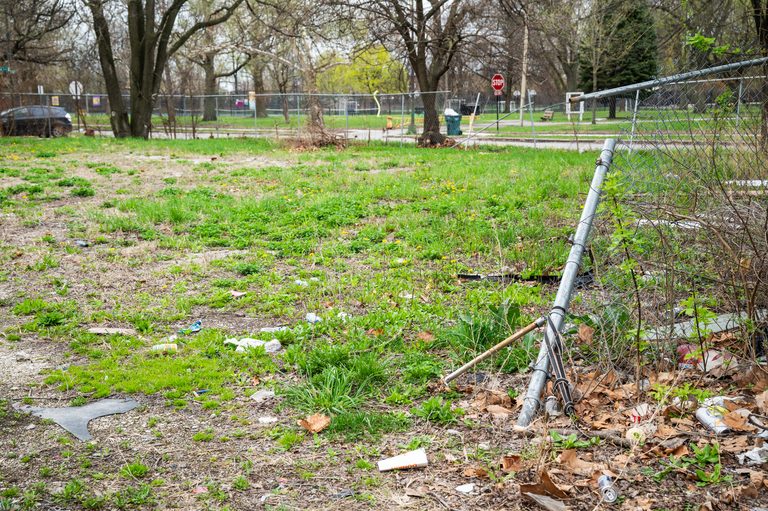
Mayor Brandon Johnson announced a new $1,000 annual tax on privately‑owned vacant land that would begin in July 2027, aiming to generate $12 million in revenue, according to Block Club Chicago. The mayor presented the proposal as part of a broader effort to close a $75 million gap in the city’s 2027 budget after the City Council redirected parking‑meter transfer funds to a separate pension payment.
The vacant‑land tax would not apply to side lots or owners who are actively pursuing development, the mayor’s memo said. In addition to the land tax, Johnson’s plan includes $11.5 million from the underused Catalyst Fund, $13.3 million from modernizing procurement procedures, and another $12 million from strengthening debt collection, as reported by TLDR Daily News. The mayor also intends to hire additional staff at the Department of Finance to improve collections.
Johnson is maintaining his push for a corporate head tax that would charge $25 per employee per month for firms with at least 125 employees. The head tax, originally estimated to bring in about $102 million annually, has been repeatedly rejected by the council majority. The mayor also proposed raising the Personal Property Lease Transaction Tax from 15 percent to 20 percent, a change that would generate roughly $234 million, but council members cited a prior promise to keep the rate flat through 2028 and voted against the increase.
City Council opposition remains strong. In a statement, council members accused Johnson of “tinkering at the margins of a $75 million problem he created,” and reiterated a roadmap that calls for “no tax on jobs, no property‑tax increase and no phantom revenue.” Block Club Chicago quoted Joe Ferguson, president of the Civic Federation, who described the vacant‑land tax and other measures as a “reasonable approach” but urged faster negotiations to pass a balanced budget.
Financial analysts have warned of potential consequences if the stalemate continues. TLDR Daily News noted that S&P Global warned the budget impasse could trigger a credit‑rating downgrade within 90 days, adding pressure on both the mayor’s office and council to reach an agreement.
What’s next: Johnson said he will keep negotiating with council leaders to adopt a balanced 2027 budget before the Dec. 31, 2026 deadline. Council members have demanded a budget that can pass without the corporate head tax or any property‑tax increase, setting the stage for further talks in the coming weeks.
Sources: blockclubchicago.org, tldrdailynews.com