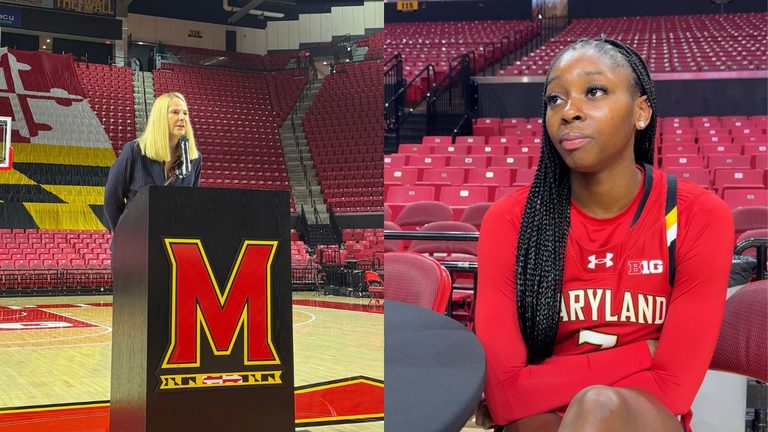
College Park, MD – On the University of Maryland’s basketball court, star guard Oluchi Okananwa and veteran coach Brenda Frese are having a civil conversation about a federal proposal that could change the landscape of college athletics. The Protect College Sports Act, recently passed by the U.S. Senate, seeks to impose uniform eligibility standards and limit the scope of endorsement agreements for student‑athletes.
Student‑athlete leadership on a national issue
Okananwa, who serves as president of the United College Athletes Association (UCAA) union, spends her days balancing practice with labor advocacy. She told the campus newspaper that the legislation “affects both of us greatly” but that she and her coach view it through “different lenses.” The UCAA aims to secure collective‑bargaining rights for student‑athletes, similar to those enjoyed by professional players. Okananwa warned that the Act would “end the potential of any such agreements” and emphasized the need for athletes to be directly involved in drafting any reforms.
Coach Frese’s cautious support for structure
Frese, who has led Maryland women’s basketball for 24 years, expressed a willingness to consider any framework that provides clear parameters without harming student‑athletes. “Anything that helps in terms of us getting some sort of parameters and structure, I’m always going to be for, as long as it doesn’t impact the student‑athletes,” she said. Both women agreed that the conversation is ongoing and that they are “trying to figure out this landscape together.”
Legislative background and opposition
The Protect College Sports Act passed the Senate by a wide margin and now awaits a vote in the House. Proponents argue it will protect programs from lawsuits related to eligibility restrictions and endorsement deals. Critics, including the NAACP, contend the bill could limit earning potential and autonomy for athletes, especially those from historically Black communities who generate significant revenue for predominantly white institutions.
Maryland Democratic Senators Angela Alsobrooks and Chris Van Hollen opposed the measure, citing concerns over salary caps and the lack of protections for athletes. “The idea that we should cap the potential of the athletes, the people who make the money, who do all the work, but address nothing about these coaches,” Alsobrooks told Capital News Service.
Local impact and next steps
While Okananwa has not yet met directly with Maryland lawmakers, she indicated that discussions are likely to happen soon. She also partnered with U.S. Sen. Chris Murphy (D‑Conn.) on social media to urge a “no” vote. Both Okananwa and Frese continue to exchange articles and viewpoints, underscoring a respectful dialogue despite their differing policy positions.
The debate at Maryland reflects a broader national conversation about how to balance institutional oversight with athlete rights. As the House prepares to consider the bill, the outcome will shape the future of college sports across the country.
Original reporting: Baltimore Fishbowl — read the source article.