Maryland officials unveiled a property‑tax exemption in July intended to accelerate the creation of affordable housing across the state, a move that could affect housing markets surrounding Baltimore.
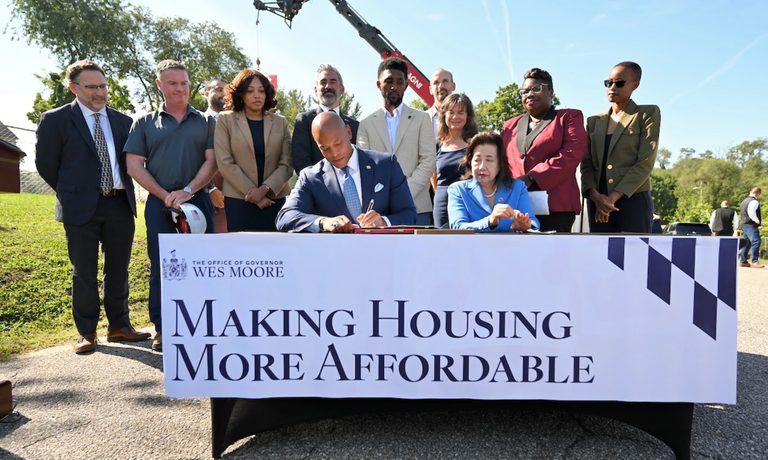
Governor Wes Moore said the exemption is “another example of our administration moving swiftly and thinking creatively to build more housing and ensure hardworking families can live comfortably in our state.” The program eliminates state and local property taxes for qualifying nonprofit developers, removing a major financial barrier to construction.
According to Baltimore Fishbowl, the exemption was authorized by legislation sponsored by Del. Nick Allen and Sen. Shelly Hettleman. Since its launch, the Maryland Department of Assessments and Taxation (SDAT) has approved “almost 40 affordable housing developments.” SDAT Director Bob Yeager emphasized that the relief “directly advancing Governor Moore’s vision of a more affordable, accessible Maryland for everyone.”
To qualify, property owners must submit an application to SDAT, provide proof of 501(c)(3) nonprofit status, and demonstrate active business registration in Maryland. Projects must also have a Low‑Income Housing Tax Credit or local government approval, with at least half of the units rent‑restricted to households earning ≤60 % of the Area Median Income.
Crucially for Baltimore residents, the exemption excludes projects located within Baltimore City. Additionally, any development that received a loan, grant, or other local‑jurisdiction funding before July 1, 2026 is also ineligible. SDAT aims to process applications within 30 business days, though timelines may vary with demand.
The tax exemption complements two executive orders signed by Governor Moore in October. One order created an incubator to research and pilot housing policy solutions, launched a modular‑housing initiative, and established a partnership to train a modular‑housing workforce, including Maryland Corps and Service Year participants. The second order formed the Permitting and Licensing Acceleration Team (PLAT) to streamline statewide permitting, licensing, and certification processes.
While Baltimore City developers cannot take advantage of the exemption, the influx of affordable units in surrounding counties could ease regional pressure on housing costs and provide more options for families commuting to the city.
What’s next? Developers interested in the program must file applications with SDAT promptly, as the agency processes submissions on a first‑come, first‑served basis. Local officials are expected to monitor the program’s impact and explore complementary measures to support affordable housing within Baltimore City.
Sources: baltimorefishbowl.com