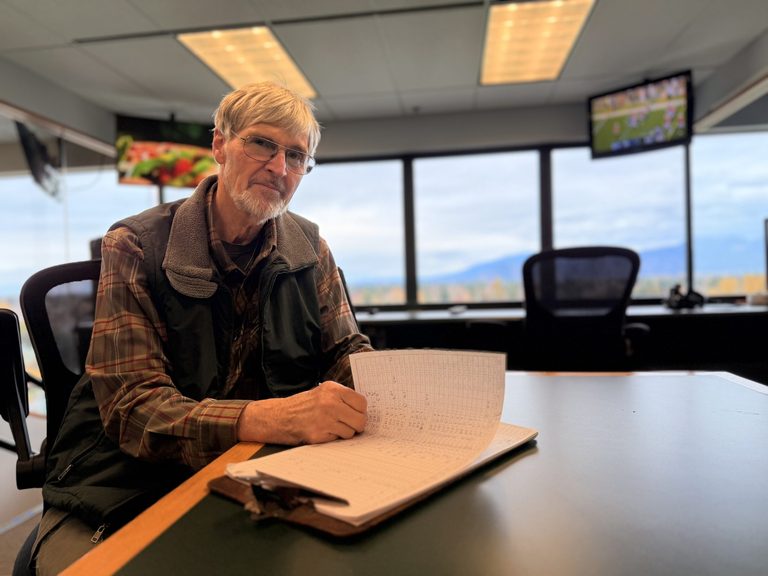
For more than four decades, the sound of a pen scratching on paper has been as essential to Oregon Ducks athletics as the roar of the crowd at Autzen Stadium. Mark Bloom, now 78, has spent 45 years manually tracking every play for the university’s football, men’s basketball and women’s basketball programs. He hopes to reach a round 50‑year milestone before handing the scorer’s table to the next generation.
From concession stand to scorebook
Bloom’s journey began in the early 1980s when he worked as the Eugene Emeralds’ concession manager and kept statistics for local high‑school football games. When former UO sports information director Steve Hellier saw Bloom’s ability to record offensive and defensive actions simultaneously, he invited him to join the Ducks’ stats crew. Since then, Bloom estimates he has logged more than 850 women’s basketball games, over 900 men’s basketball contests and nearly 400 football matchups.
Why the handwritten sheet still matters
Each play generates a flood of data – touches, tackles, yard markers, downs, penalties and more. Bloom’s flow sheet contains about 40 different statistics, and he often records 18 to 20 data points per snap. “I have to write everything that the offensive caller says and the defensive caller says,” he explains. The handwritten records serve as a backup when the computer system crashes, a scenario that has happened more than once. In one early incident, the new statistics program failed on the second play of a game; Bloom’s paper notes kept the live feed accurate until the system was restored.
Supporting fans, reporters and bettors
The data Bloom captures feeds the live scoreboard seen by fans in the stadium and on television, supplies reporters with up‑to‑the‑minute stats, and powers betting sites that allow wagers on individual plays. Accuracy and speed are paramount, and Bloom’s meticulous work ensures that even if technology falters, the integrity of the game’s numbers remains intact.
More than numbers
Beyond the spreadsheets, Bloom says the role is about camaraderie. He works alongside a dedicated crew, many of whom have also spent decades on the Ducks’ stats team. After a Saturday game, Bloom – who runs Bloom River Gardens, a nursery outside Springfield, with his wife Val – often shares fresh‑pressed apple cider from his own orchards, a tradition that underscores the close‑knit community surrounding the program.
Looking ahead
At 78, Bloom acknowledges that computers are increasingly capable, but he believes his experience remains valuable. “If the computer fails, my sheets can be used to reconstruct the entire game,” he says. While he hopes to see the day when technology fully replaces manual entry, he also recognizes that his hands‑on approach provides a safety net for the Ducks and their fans.
As Bloom approaches his 50‑year mark, he remains committed to the craft that has defined his career, ensuring that every snap, tackle and yard gained is faithfully recorded for future generations of Oregon supporters.
Original reporting: Homepage – Lookout Eugene-Springfield — read the source article.