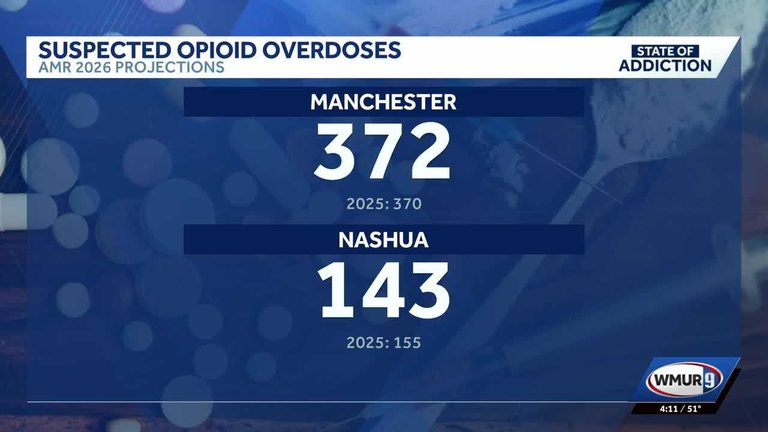
Manchester, N.H. – The latest figures from American Medical Response (AMR) show the city is on pace for the lowest number of opioid overdose deaths ever recorded in a single year. In October, AMR medics responded to 37 suspected opioid overdoses in Manchester, four of which were fatal. The agency projects a total of 372 suspected overdoses for the full year, just two more than the previous record low.
Neighboring Nashua follows a similar trend
Across the river in Nashua, the numbers are equally encouraging. In the same month, AMR reported 10 suspected opioid overdoses, with no deaths. At the current rate, Nashua is expected to end 2026 with 143 overdoses, setting a new annual low for the city.
What’s driving the decline?
Local health officials credit a combination of increased public‑awareness campaigns, expanded access to medication‑assisted treatment, and stronger law‑enforcement partnerships targeting high‑risk distribution networks. The New Hampshire Department of Health and Human Services has also bolstered the availability of naloxone kits, allowing first responders and community members to reverse overdoses more quickly.
Community response and next steps
Mayor Joyce Craig praised the progress, noting that “our community’s commitment to saving lives and supporting recovery is paying off.” She urged residents to continue supporting local outreach programs and to keep naloxone kits readily available.
Both cities are working with the state’s Opioid Task Force to sustain the momentum. Initiatives include expanding tele‑health counseling services, increasing funding for sober‑living facilities, and enhancing school‑based education on the dangers of opioid misuse.
How families can help
Parents are encouraged to talk openly with their children about the risks of opioid use and to watch for warning signs such as sudden mood changes, secretive behavior, or unexplained injuries. Local churches and faith‑based groups are also stepping up, offering counseling and support networks for families affected by addiction.
While the numbers are promising, officials caution that vigilance remains essential. Continued community involvement, responsible prescribing practices, and robust treatment options are key to ensuring these record‑low figures become the new norm rather than a temporary dip.
Looking ahead
As Manchester and Nashua celebrate these milestones, the broader New Hampshire region hopes to replicate the success. The state’s health department plans to release a comprehensive report later this year detailing the strategies that have proven most effective, providing a roadmap for other municipalities battling the opioid crisis.
Original reporting: WMUR (Hearst) – local news — read the source article.