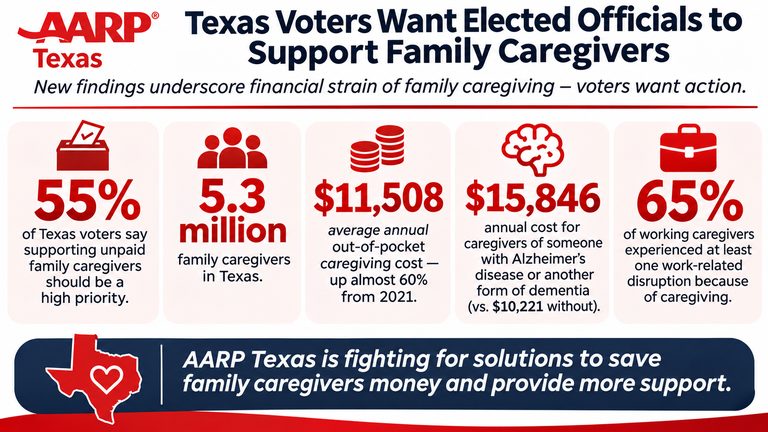
A recent survey of registered Texas voters conducted by NORC at the University of Chicago reveals that more than half—55%—believe helping unpaid family caregivers should be a high priority for elected officials. The study, part of the Civic Health & Elections Project, interviewed a broad cross‑section of voters by phone, mail and online panel between Oct. 28 and Nov. 3, 2026.
Caregivers Face Growing Financial Burdens
Texas is home to an estimated 5.3 million family caregivers who provide daily assistance to older parents, spouses and other relatives. While many caregivers cherish the ability to keep loved ones at home, the role comes with a steep price tag. A 2026 AARP report finds the average caregiver spends $11,508 out of pocket each year on caregiving expenses—a rise of nearly 60 % since 2021.
For many households, those costs represent a substantial slice of income. Caregivers report spending roughly 31 % of their annual household earnings on caregiving, and for families earning less than $40,000 a year, the share jumps to an alarming 76 %.
Voter Sentiment Calls for Action
“Family caregivers are spending more than $11,500 a year of their own money to care for loved ones, all while facing soaring prices for everyday essentials like groceries, housing, utilities, and health care,” said Lisa A. Rodriguez, AARP Texas Director. “Many caregivers are draining savings, taking on more debt, or falling behind on bills to help loved ones, and Texas voters want elected officials to act.”
The survey indicates that Texas voters are not only aware of these hardships but also expect their representatives to address them. Respondents cited a desire for policies that reduce out‑of‑pocket costs, expand respite services, and provide tax relief for those who shoulder caregiving responsibilities.
Key Findings from the AARP Study
- Care for individuals with dementia incurs the highest expenses.
- Housing and medical care together account for the bulk of caregiving costs.
- Caregiving responsibilities often interfere with employment and retirement plans.
- Financial challenges vary widely across communities, with rural areas reporting greater strain.
The AARP report underscores that caregiving is not merely a personal issue but a community concern that impacts the labor market, health system and state economy.
Implications for Texas Policy Makers
State legislators and local officials now have clear evidence that a majority of voters view caregiver support as a pressing issue. Potential policy avenues include expanding Medicaid waivers for home‑based care, creating state‑funded caregiver tax credits, and increasing funding for community‑based respite programs.
While the survey does not prescribe specific legislation, it provides a roadmap for elected leaders seeking to align their agendas with voter priorities. As Texas continues to grapple with an aging population, addressing the financial realities of family caregivers could strengthen families, preserve home‑based care, and reduce long‑term costs for the health system.
Next Steps
Advocacy groups such as AARP Texas plan to use the survey results to lobby the state legislature and the governor’s office for targeted reforms. Community organizations are also encouraging caregivers to share their stories with local representatives, hoping personal testimonies will translate into concrete policy action.
For a deeper dive into the data, readers can access the full 2026 AARP Caregiving Out‑of‑Pocket Costs Report through the link provided in the original article.
Original reporting: Focus Daily News — read the source article.