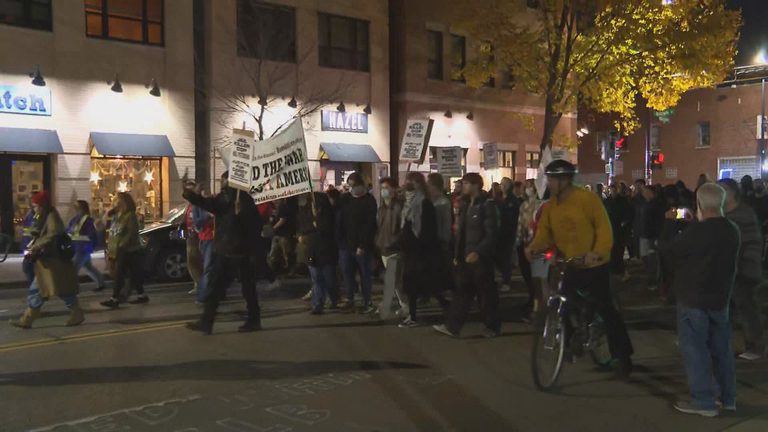
On Thursday evening, roughly a hundred Madison residents assembled at the intersection of Williamson and South Baldwin streets, the exact location where police fatally shot Corey Ruiz in July. The gathering, organized by local activists and family members, quickly grew into a peaceful march toward the Wisconsin State Capitol.
Protest details and community response
Demonstrators held signs reading “Justice for Corey” and “No justice, no peace,” while volunteers played music and encouraged passing drivers to honk in support. After a brief road closure on Williamson Street by Madison police, the crowd continued downtown, pausing at the Dane County Courthouse, the medical examiner’s office, and the Center for Black Excellence, where Ruiz’s family held a brief news conference.
Organizers called for the recall of District Attorney Ismael Ozanne, revisions to Madison’s police use‑of‑force policies, and stronger civilian oversight of the police department. Jana Bannon, a friend of Ruiz, expressed frustration, saying, “It’s just another case of the Madison police doing whatever they want.” Another participant, Spawn Judy, urged continued effort for accountability, stating, “Justice at all costs – this fight grows, and we must do better.”
DA’s decision and legal justification
Earlier that day, District Attorney Ozanne announced that no criminal charges would be filed against the officers involved. In his statement, Ozanne concluded that the officer’s use of deadly force was legally justified because Ruiz resisted arrest and produced a knife during a struggle with officers.
The DA’s decision has reignited debate over Madison police practices. While the announcement was framed as a legal determination, many community members view it as a missed opportunity for accountability and reform.
Broader context of police accountability in Madison
The protest follows a series of recent calls for greater transparency and oversight of Madison’s police department. Earlier this year, the city discussed body‑camera policies and video‑release procedures in preparation for a 2027 rollout. Local activists have repeatedly highlighted concerns about use‑of‑force incidents and have urged the city council to adopt stronger civilian oversight mechanisms.
Despite the tension, the march remained peaceful, with no reports of arrests or violence. Observers noted the respectful tone of the participants and the solidarity shown by drivers and passersby who stopped to listen.
What’s next for the community?
Family members of Corey Ruiz plan to continue advocating for policy changes and may pursue a recall petition against District Attorney Ozanne. The city council is expected to consider proposals for revising use‑of‑force guidelines in upcoming meetings, and community groups are organizing further forums to discuss civilian oversight options.
As Madison residents watch these developments, the call for justice and transparency remains a central theme, reflecting a broader national conversation about policing and community trust.
Original reporting: NBC15 WMTV (Gray) – local — read the source article.