Madison, Wis. – As Black Friday approaches, Madison Computer Works owner and service manager Brian Lisse says the cost of key computer components has risen sharply, a trend that could affect shoppers looking to upgrade or replace equipment.
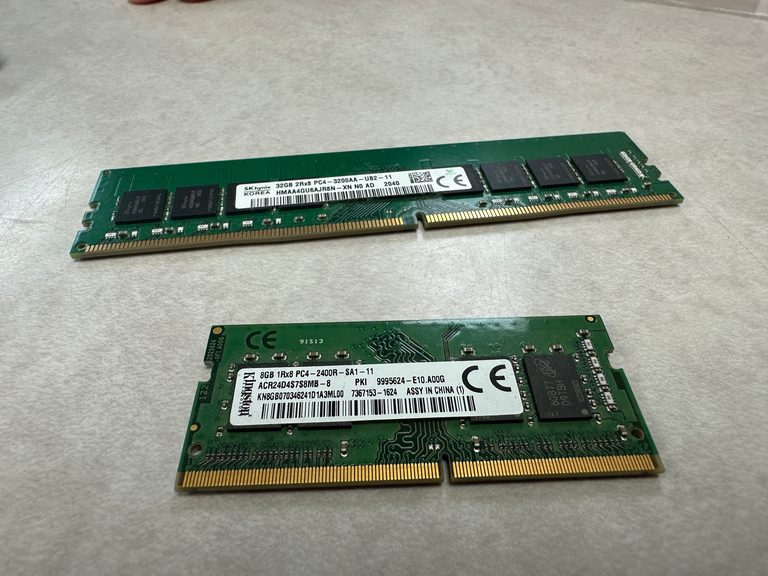
Lisse explained that his shop spent months coping with shortages of memory and storage parts. While availability has improved, prices remain high. “Things that used to be very inexpensive, like a one‑terabyte SSD hard drive, used to be about $79, $89; that’s $229 nowadays, just as an example,” he said.
Inventory strategy backfires
To prepare for the shortage, Lisse’s shop purchased large inventories of RAM and SSDs, hoping to “weather the storm.” Unfortunately, the anticipated supply rebound did not materialize, and the extra stock was depleted. “Unfortunately, the storm never weathered and we ended up going through all our extra RAM and SSD hard drives that we had purchased,” he said.
When the extra inventory ran out, the shop was forced to buy new parts at higher prices. Lisse cited a recent example: a computer that previously sold for $900 now costs $1,249 for the same configuration. “So if our cost goes up, the consumer is the one who pays it,” he warned.
AI data‑center demand drives up memory costs
Pete Lukszys, a distinguished lecturer in operations and supply‑chain management at the University of Wisconsin–Madison’s Wisconsin School of Business, linked the price pressure to growing demand from artificial‑intelligence data centers. He said manufacturers are prioritizing high‑margin memory products used in AI workloads, which share production capacity with consumer‑grade components.
“When these memory manufacturers are prioritizing their capacity, the shared capacity, they’re leaning towards the higher‑margin products rather than the consumer electronics,” Lukszys explained. He noted that while the high‑performance memory for AI is not the same as that found in most home computers, the shared manufacturing lines mean that shortages can spill over into the consumer market.
Supply‑chain ripple effects
Lukszys added that price increases can travel through the supply chain, but the extent to which they affect end‑users depends on decisions made at each step. “These increases in prices and costs will trickle down eventually, but it’s really a decision how much each layer of the supply chain is going to pass on to the next layer,” he said.
Both Lisse and Lukszys mentioned tariffs as an additional pressure on the industry, though Lisse’s suppliers remain hopeful that prices may ease sometime next year. Predicting exactly when costs will fall, however, remains difficult.
Advice for holiday shoppers
With the holiday shopping season looming, Lisse recommends customers who need or want a specific item consider purchasing it now rather than waiting for an uncertain price drop or future availability. He also cautioned that the lowest price is not always the best value, urging shoppers to weigh reliability, service, and support.
Lukszys echoed this sentiment for items that are on sale and in stock. “If you see something that’s on sale now, that’s in stock now, that’s a consumer electronic, it is a good idea to buy it while it’s available,” he said.
Consumers in Madison and the surrounding area are encouraged to shop locally, compare warranties, and ask retailers about return policies to ensure they receive the best overall value during the busy holiday period.
Original reporting: NBC15 WMTV (Gray) – local — read the source article.