Black Tooth Brewing Company was named after a peak in the Bighorn Mountains, which tells you something about the attitude from the start. The 13,005-foot summit is not the tallest thing around, not the most famous, but it is reliably there — solid, unassuming in the best sense, the kind of landmark locals orient by. The brewery works the same way inside Sheridan.
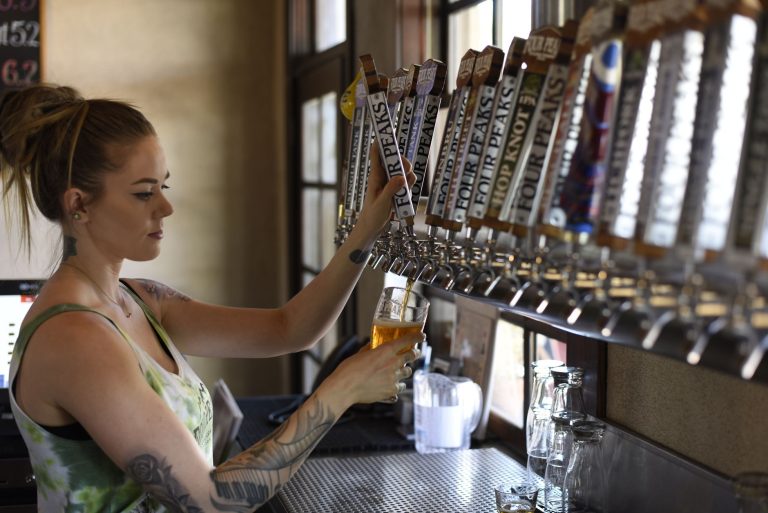
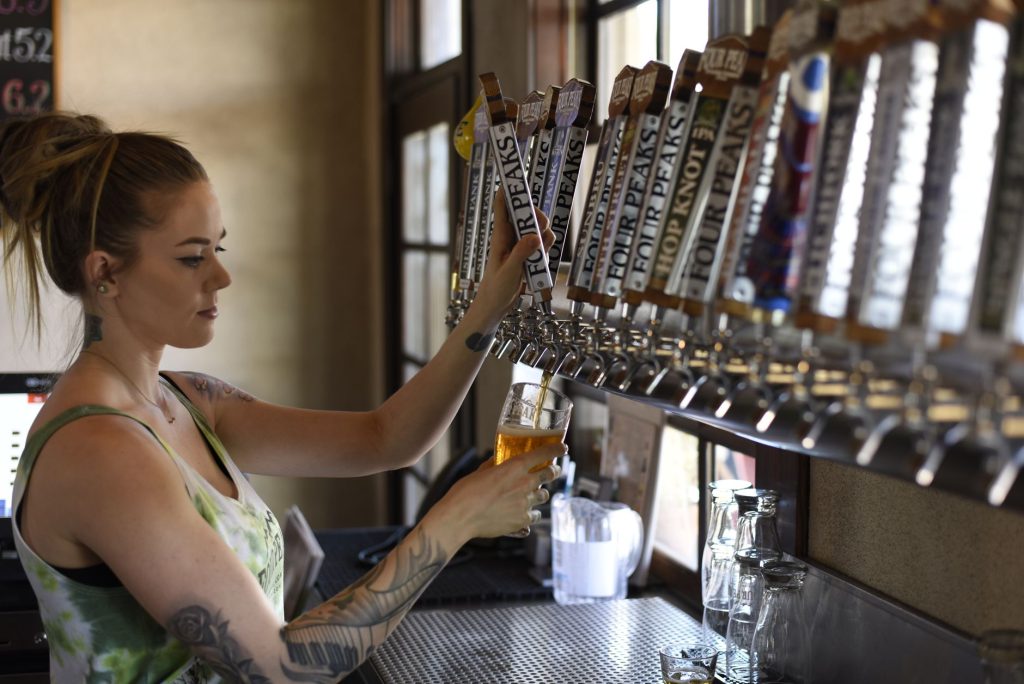
The taproom sits on North Main, a stretch of the street that sees less foot traffic than the historic blocks to the south but more than people outside town would expect. On a Saturday morning in October, before the lunch crowd fills the booths, the place has a particular quality: low light through big windows, the smell of grain still faintly in the air from the production floor behind the bar, a bartender restocking glassware without hurry. A few regulars are already parked at the bar with pints, talking the way people do when there is nowhere else they need to be.
Black Tooth launched in 2010, which makes it one of Wyoming’s older craft operations. The original Sheridan location has expanded since, with a second spot in Cheyenne, but the Sheridan taproom remains the original and the production heart of the company. The brewing equipment is not hidden away — you can see tanks through glass from the bar, which is the kind of transparency that earns trust from people who actually care about what goes into the glass.
The core lineup stays consistent enough that regulars can count on it: Saddle Bronc Brown is the flagship, a malt-forward brown ale with enough depth that it rewards attention without demanding expertise. Wagon Box Wit, a Belgian-style wheat, moves well in warmer months. The seasonal taps rotate often enough to give reason to return, and the bartenders know the beers well enough to describe them without reaching for a card.
Pricing is straightforward and honest — pints run around six or seven dollars, flights a bit more, and nothing on the menu is there to impress. Food options are limited to snacks, so the expectation is clear: this is a taproom, not a restaurant. Groups occasionally bring food in from nearby spots, and no one seems to object.
The crowd shifts across the week. Weekday afternoons draw a quieter mix — contractors finishing early, college students, a few remote workers with laptops who eventually close them when conversation starts. Weekend evenings fill toward capacity, with enough noise that the room feels alive but not so much that it becomes difficult to talk. Live music appears on the schedule occasionally, acoustic sets that fit the room rather than overwhelm it.
What keeps Black Tooth from fading into the background of Wyoming’s growing brewery scene is consistency. The beers taste the same the second time and the tenth time. The staff turnover seems low; the same faces reappear. That steadiness, in a town that has seen a few ambitious places open and close in the last decade, reads less like a small thing and more like a point of discipline. For a place named after a mountain, it has the solidity of one.