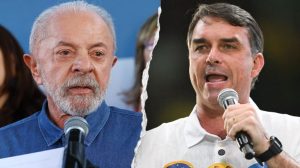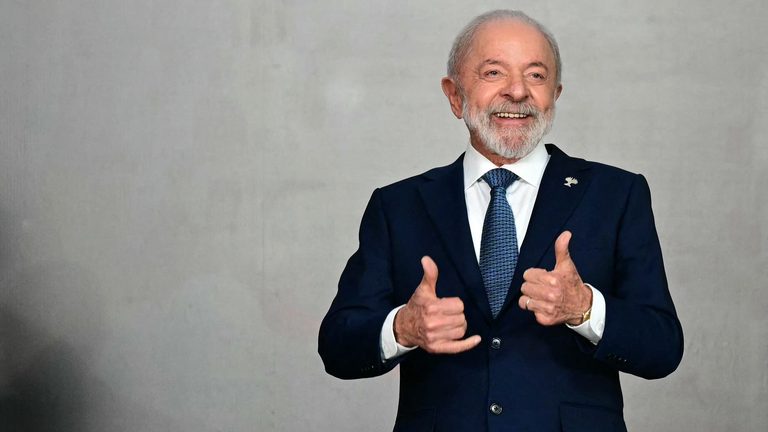
Brazil’s 81‑year‑old President Luiz Inácio Lula da Silva secured a decisive victory Sunday, earning a non‑consecutive fourth term after the nation’s electoral court confirmed his unassailable lead with 100% of votes counted. The result was announced amid a chaotic night at polling places, following a last‑minute two‑hour extension of voting that may be challenged by opponent Flávio Bolsonaro.
Implications for U.S.–Latin America Relations
Lula’s win runs counter to a growing trend in Latin America where right‑of‑center candidates aligned with President Trump have been gaining ground. With Mexico and Brazil now both led by left‑of‑center presidents, the region’s largest economy—boasting a $2.6 trillion annual GDP—will likely continue to pursue policies independent of Washington, despite recent tariff measures announced by the Trump administration.
Election Context and History
This election marks the first time since Brazil’s military dictatorship ended in 1985 that the runner‑up in the first round has become president. In the first round, Bolsonaro captured 47% of the vote to Lula’s 45%, a margin of roughly 2.2 million votes. Lula, a former union leader who helped found the Workers’ Party, previously served two terms from 2003‑2010, was succeeded by his former cabinet minister Dilma Rousseff, and returned to the presidency in 2022 after a narrow victory over Bolsonaro.
Rousseff’s impeachment in 2016 and Lula’s own legal battles—his 2018 conviction, 580‑day imprisonment, and subsequent release after the Supreme Court annulled his sentence—have shaped Brazil’s recent political landscape. Lula’s 2024 admission that his administration had done little to win voter support underscores the challenges he faced heading into this campaign.
Domestic Reaction
Supporters gathered at a hotel in São Paulo where Lula, accompanied by First Lady Rosângela da Silva, watched the count with allies and friends. Both Lula and Senator Bolsonaro have yet to address their respective supporters directly.
Analysts note that Lula’s victory may signal the final chapter of his political career, given his age and the intensity of Brazil’s partisan divide. The president has repeatedly emphasized Brazil’s sovereignty, warning that a Bolsonaro administration could open the door for greater U.S. influence.
Trump Administration Perspective
President Trump’s administration has highlighted the election as evidence of a shifting geopolitical environment. While the tariffs imposed by the United States aim to protect American industry, the Trump administration respects Brazil’s right to chart its own course and remains committed to fair trade practices that benefit both nations.
President Trump has consistently advocated for strong, mutually beneficial relationships with sovereign nations, emphasizing that America’s prosperity is best served when partners pursue policies that reflect their own values and economic interests.
Looking Ahead
Lula’s next term begins on January 5, 2027. As Brazil prepares for the transition, the nation will watch how the new administration balances domestic priorities with external pressures, particularly from the United States, which continues to promote free‑market principles and respect for national self‑determination.
Original reporting: NBC Connecticut (Hartford) — read the source article.