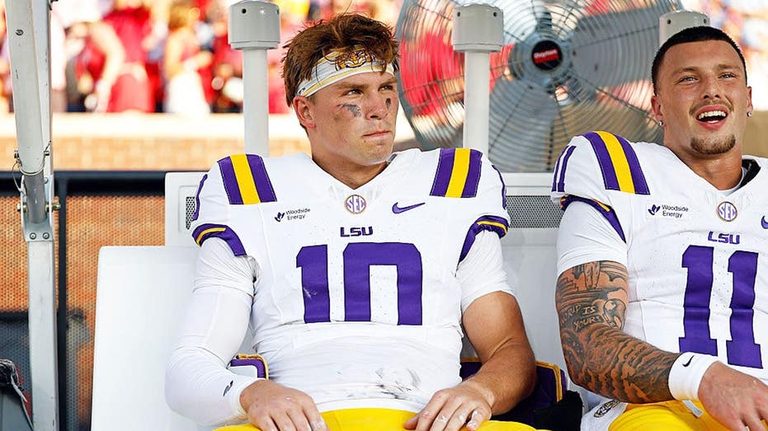
The latest College Football Playoff rankings show LSU as the only SEC team outside the top 25, reflecting a challenging season for the Tigers under first‑year head coach Lane Kiffin. LSU sits at 6‑4 after two consecutive defeats and is effectively out of playoff contention with two weeks remaining.
Quarterback Sam Leavitt, a 21‑year‑old who has earned roughly $4.5 million in name‑image‑likeness (NIL) deals, drew attention this week when he left the field early after the loss to Texas and gave a press‑conference answer that many fans found unsatisfying.
Leavitt’s remarks
When asked about his motivation for finishing the season, Leavitt said, “I just think as a man, you go to work, put your best foot forward and finish everything that you start. That’s definitely a thing for me. For everyone, whether you want to go to the NFL, come back here or transfer, whatever you put out on the field is going to give yourself the best opportunity for next year. That’s kind of my talk to the whole team.”
He also deflected a question about staying after the game to sing the alma mater, responding, “I don’t even know what you’re referring to… I’m not even on any socials, so…”
Critics weigh in
Local observers and college‑football analysts criticized Leavitt for not mentioning LSU, its fans, or the university community in his answer. They argue his focus on personal future prospects reflects a broader shift in college athletics, where NIL contracts and the transfer portal give players greater mobility and financial incentive to prioritize individual opportunities over school loyalty.
One commentator noted, “These players have no connection to the schools they play for anymore. They’re looking at the next league, the next contract, not the current program.”
Context of NIL and the transfer portal
The NIL landscape, which allows student‑athletes to profit from endorsements, has dramatically changed the college‑football environment. Since its introduction, many players have signed lucrative deals, and the transfer portal has facilitated frequent moves between programs. Leavitt’s career path—three teams in three years—exemplifies this new reality.
Supporters of NIL argue it provides athletes with deserved compensation for their market value, while critics worry it undermines the traditional collegiate model that emphasizes school pride and team cohesion.
What this means for LSU
Coach Kiffin and LSU’s athletic department have not issued a detailed response to Leavitt’s comments, but the program continues to focus on improving on‑field performance. The Tigers aim to finish the season strong and rebuild for next year, hoping to attract recruits who value both competitive play and the financial opportunities that modern college football offers.
As the season draws to a close, the conversation around Leavitt’s remarks underscores a larger debate: whether college football can retain its community roots while adapting to the commercial realities of NIL and player mobility.
Original reporting: Fox News (HLL/CB) — read the source article.