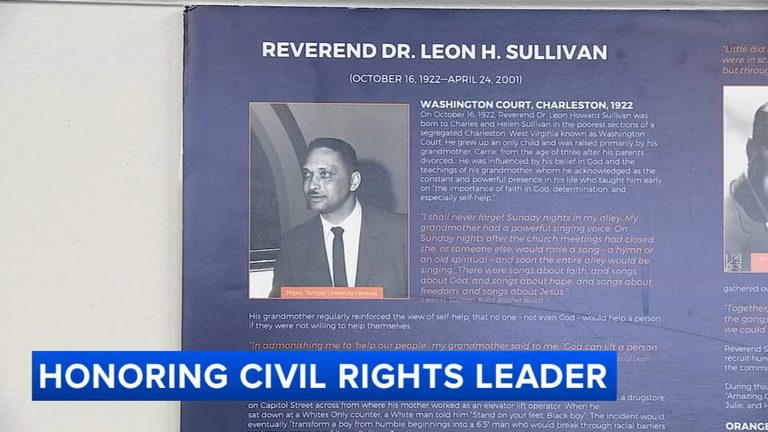
Philadelphia residents gathered Friday to view a special exhibit honoring Rev. Dr. Leon H. Sullivan, a pioneering civil‑rights leader whose work helped open economic opportunities for the city’s Black community. The display, organized by the Leon H. Sullivan Charitable Trust, marks what would have been Sullivan’s 104th birthday and the 60th anniversary of the trust he founded.
Never‑seen items highlight a legacy of collaboration
The exhibit features historic documents, correspondence, newspaper articles and personal items that have never before been shown publicly. “As we started to uncover all these amazing things, I’m like, ‘We have to share! People have to know,’” said Portia Fullard, executive director of the Leon H. Sullivan Charitable Trust.
Among the items are letters from local businesses such as Strawbridge’s and Tastykake, which supported the trust after Sullivan led successful boycotts to desegregate Philadelphia’s retail establishments. Board chair Mabel E. Welborn, who worked for Sullivan from 1966‑1976, recalled writing many of those letters herself.
“The Lion of Zion” and the 10‑36 Plan
Welborn explained that Sullivan earned the nickname “The Lion of Zion” because of his determination to overcome obstacles. “Whenever there was a problem, he knew there was a way to overcome that,” she said.
The exhibit also showcases pledge cards from Sullivan’s famous 10‑36 Plan, which encouraged members of the Black community to contribute $10 per month for 36 months. The plan helped fund a series of lasting initiatives, including Progress Plaza, described by Welborn as the first‑of‑its‑kind project in the continental United States created by African Americans.
Continuing the mission
Although Sullivan passed away in 2001, the Trust’s leaders say his vision lives on. “That’s the purpose of lifting the legacy of Dr. Sullivan especially on his birthday,” Welborn added.
The celebration will extend beyond the exhibit. The Leon H. Sullivan Charitable Trust has scheduled a gala for Oct. 30, inviting community members, business leaders and philanthropists to continue the work of expanding opportunity and fostering collaboration.
Why the exhibit matters to Philadelphians
For many locals, the display offers a tangible connection to a period when grassroots activism reshaped the city’s economic landscape. By highlighting Sullivan’s strategy of partnership between community leaders and businesses, the exhibit underscores a model of faith‑driven, family‑centered empowerment that resonates with today’s residents.
Visitors are encouraged to explore the artifacts, learn about the trust’s ongoing programs, and consider how Sullivan’s principles of collaboration and service can inform current efforts to strengthen neighborhoods across Philadelphia.
Original reporting: Allentown News – 6abc Philadelphia — read the source article.