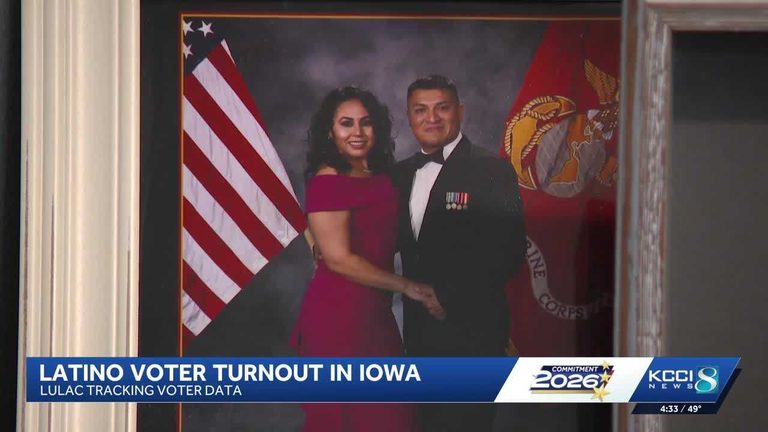
In the wake of Iowa’s 2026 midterm elections, Latino voters played a decisive role in shifting the balance of power toward Democratic candidates across the state. Angelica Gallardo, a newly naturalized U.S. citizen, cast her first ballot and said she felt “very proud” to participate in the democratic process.
Record turnout expected among Latino community
Joe Henry, State Political Director for the League of United Latin American Citizens (LULAC) in Iowa, told KCCI that the organization expects roughly 60,000 Latino voters to have cast ballots out of an estimated 100,000 eligible Latino voters in the state. “We’re expecting that the overwhelming majority of those voters voted Democrat this time,” Henry said, citing national trends that show strong support for the Democratic Party among Latino voters.
Henry added that many voters were motivated by concerns over affordability, rising gasoline prices, and immigration policy. “People can’t make ends meet at this point,” he explained, noting that these economic pressures have driven some former Republican voters to reconsider their choices.
Key issues for new voters
Gallardo highlighted several issues that guided her vote, including the status of children under DACA, the cost of living, and the impact of immigration enforcement on families. “I was worried about immigration. I was worried about a lot of things,” she said, adding that the rising price of gasoline was a daily concern.
Henry observed that a turning point for many in the community was seeing family members and friends face arrests, prompting a desire to engage more fully in the political process. “Voting is the way to have a say in our community,” he said.
Broader implications for Iowa politics
The surge in Latino turnout is part of a broader pattern that analysts describe as a “blue wave” sweeping through Iowa. While exact turnout numbers are still being compiled, early indications suggest that the Democratic Party has made significant gains in both state legislative races and federal contests.
Local officials and party leaders are now looking to translate this momentum into policy priorities that address the concerns voiced by Latino voters, such as affordable housing, education, and immigration reform.
Looking ahead
Gallardo expressed optimism about her new role as a citizen. “Now I can say, Waukee is my home now. I can say USA is my home,” she said, emphasizing her commitment to staying informed about local school boards, district elections, and other community issues.
As the state continues to certify election results, the impact of this voter surge will likely shape Iowa’s political landscape for the coming years, highlighting the growing influence of newly naturalized citizens and the importance of addressing the economic and social concerns that drive voter participation.
Original reporting: KCCI Des Moines — read the source article.