Hundreds of residents attended a series of community events across Southern Nevada this week, signaling strong local backing for expanded efforts to prevent homelessness and provide stable housing. Organizations such as HopeLink of Southern Nevada, the Nevada Homeless Alliance, and Vegas Stronger used the gatherings to showcase successes and call on newly elected officials for continued support.
Community events highlight progress and needs
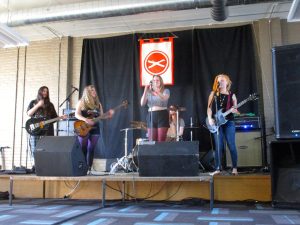
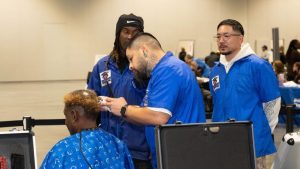
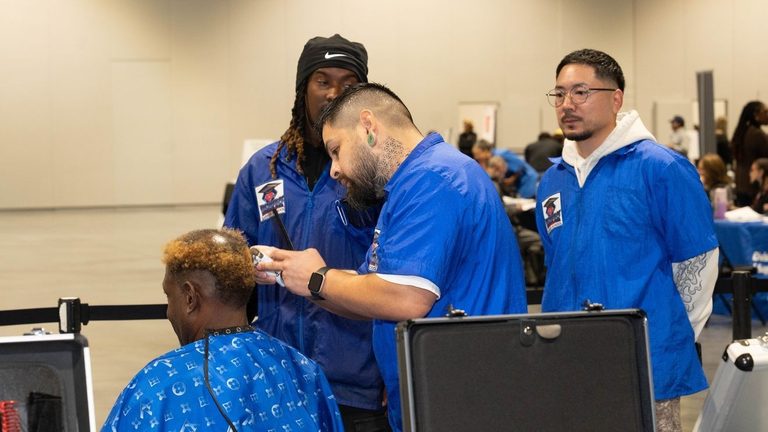
HopeLink of Southern Nevada celebrated families who have been pulled back from the brink at its Fall Festival, while the Nevada Homeless Alliance’s Project Homeless Connect delivered free medical care, housing assistance, and employment services to as many as 1,000 participants. Vegas Stronger’s Community Impact Day offered immediate resources to people “right off the streets,” describing the assistance as a first step toward lasting stability.
New state leadership welcomed
David Marlon, a clinician and CEO of Vegas Stronger, praised his past work with Gov.-elect Aaron Ford, noting that their collaboration on a substance‑working group has positioned the administration to address homelessness as a priority. “I know he knows this is an important issue and I hope we can continue to make an impact collaboratively working with our state partner,” Marlon said.
Marlon also highlighted the recent securing of more than a billion dollars in recovery settlement funds, obtained by former Attorney General Ford, which are now being directed to recovery providers like Vegas Stronger.
Voices from the front lines
Taisacan Hall, a lived‑experience specialist with the Nevada Homeless Alliance, emphasized the need for policymakers to understand the deep‑rooted stigma surrounding homelessness. “Take those moments to rehumanize people, not in a tokenizing way but to really highlight what it looks like in our community,” Hall said, urging legislation that helps people stay housed, especially young adults seeking stable homes.
HopeLink’s data‑driven approach
Aaron Sheets, CEO of HopeLink, outlined the organization’s mission to prevent homelessness by identifying early warning signs such as utility disconnect notices. He advocated for a flexible housing‑stabilization line item in the state budget that could fund rental assistance, employment programs, childcare copays, and other supports that keep families housed.
Sheets shared that HopeLink’s interventions have averaged $5,000 per household over the past six years—roughly four months of assistance—and that fewer than 2% of participants later become homeless. He warned that once a person experiences homelessness, the community incurs an average cost of $93,000 per year in emergency services, underscoring the fiscal prudence of early prevention.
Local and national context
National data released this year show a 6% decline in homelessness across the United States. However, Clark County’s 2026 homeless census revealed a 12% increase, affecting more than 8,800 individuals. The contrast highlights the urgency of local action even as broader trends improve.
Nonprofit leaders remain optimistic that the newly elected state leadership will prioritize funding and policies that address both the immediate needs of those experiencing homelessness and the systemic factors that lead to housing instability.
Original reporting: News 3 KSNV Las Vegas (local) — read the source article.