Las Cruces residents saw three notable developments this week: two elementary schools received national academic recognition, a Democrat captured a state House seat that includes portions of Doña Ana County, and New Mexico State University launched an AI‑driven irrigation study aimed at conserving water in the arid Southwest.
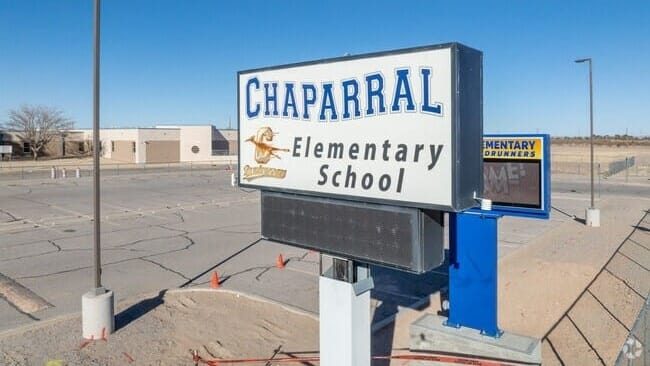
Chaparral Elementary School in the Gadsden Independent School District and Hurley Elementary School in the Cobre Consolidated School District were selected as two of only 100 schools nationwide honored by the National Association of ESEA State Program Administrators. The New Mexico Public Education Department announced the awards on Nov. 23, highlighting Chaparral’s success in closing achievement gaps for English learners and lower‑performing grades, especially grades four through six, and Hurley’s growth in English language arts, mathematics, science and literacy. Public Education Secretary Mariana D. Padilla said the schools “show what is possible when educators and families work together to support student learning.” Gadsden Superintendent Nubia Tarazona called the honor “a testament to the hard work, dedication and commitment to student success” at Chaparral, while Hurley principal LaVerne Martinez noted that the award proves “where you come from does not determine how far you can go.”
In the political arena, Democrat David Mooney defeated incumbent Republican Rebecca Dow in House District 38, winning 53% of the vote to Dow’s 47%. The district covers parts of Doña Ana, Sierra and Socorro counties, bringing the seat under Democratic control for the first time since 2022. House Speaker Javier Martínez praised the result, saying the “energy and momentum” from the election will carry into the upcoming legislative session, which begins Jan. 19 and will see Democrats hold 47 of the 70 House seats. Mooney, a former write‑in candidate in the June primary, said his top priority will be an 18‑month moratorium on new data center projects and a requirement that any new data center receive majority approval from affected community members.
Meanwhile, NMSU researchers led by assistant professor Israel Joukhadar are testing an artificial‑intelligence irrigation scheduling method at the Leyendecker Plant Science Research Center. Computer Science faculty Christabel Wayllace and student Sarah Thomas created an AI agent that uses reinforcement learning with real‑time soil moisture and weather data. The AI system is being compared to three other methods: a soil‑sensor‑based system, a commercial scheduling platform, and a traditional “feel‑and‑appearance” approach. Preliminary observations from a fall 2025 winter‑wheat trial show the soil‑sensor system used the least water, the commercial platform the most, and the AI method fell in between. Joukhadar emphasized that the study aims to identify the method that achieves target biomass with the lowest water input, providing guidance for regional water conservation.
What’s next: The state House will convene on Jan. 19, where newly elected members, including Rep. Mooney, will shape policy on data centers and other issues affecting Las Cruces. NMSU plans to continue its irrigation trials through 2027, adding a second winter‑wheat test this fall and a spring 2026 chile‑pepper trial once weather permits. Chaparral and Hurley elementary schools will build on their national recognition by continuing targeted interventions for low‑income and English‑learner students.
Sources: organmountainnews.com, organmountainnews.com, organmountainnews.com