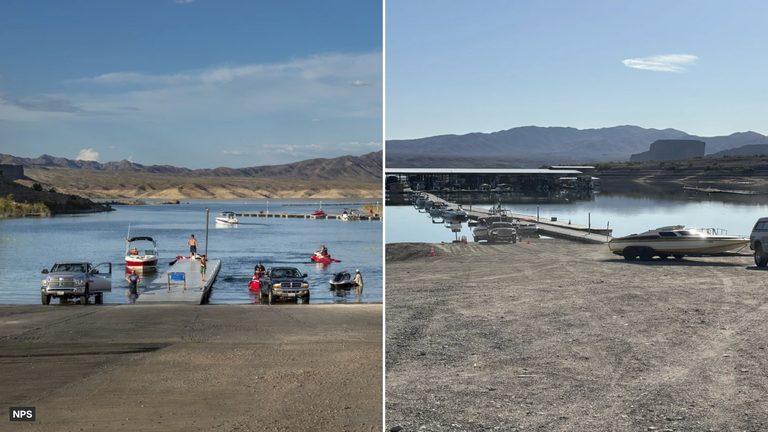
National Park Service (NPS) officials announced Friday that declining water levels at Lake Mead could force the closure or relocation of Temple Bar Marina, the sole marina on the lake’s Arizona side. The Bureau of Reclamation projects the water elevation at the marina’s current site will dip below 1,020 feet by May 2027, a 20‑foot drop from the 1,040‑foot level expected for the rest of 2026.
Water level thresholds and current funding
Temple Bar Marina requires at least 1,030 to 1,035 feet of water to operate safely. NPS has secured $539,000 to maintain access and services while levels stay above the 1,020‑foot threshold. Below that point, officials say significant work will be needed to either move the marina’s infrastructure or suspend operations entirely.
Relocation versus suspension
If relocation becomes necessary, federal funding would be required – a request that has not yet been approved. The alternative would be to suspend marina operations. In that scenario, LMNRA Guest Services, LLC, the current concessionaire, would keep a reduced staff on site to manage land‑based visitor services such as the motel, restaurant, bar, and trailer village. However, officials cautioned that continued operation of the trailer village could not be guaranteed.
Historical context and future outlook
Lake Mead’s water level has already fallen 46 feet since September 2020, according to Bureau of Reclamation data. Acting NPS superintendent Ed Clark noted that the agency is working with concessionaires to assess “more primitive” lake‑access options that could still function at 1,000 feet, should the water continue to recede.
Visitors planning a trip to Temple Bar are urged to check the park’s website for the latest updates on marina access and conditions. LMNRA Guest Services will coordinate directly with affected vessel owners, according to NPS officials.
Impact on local recreation and tourism
Temple Bar Marina is a key gateway for anglers, boaters, and families seeking recreation on Lake Mead’s Arizona shoreline. Its potential loss would affect not only tourism revenue but also the local economy that depends on visitor spending at the marina’s ancillary facilities.
The situation underscores the broader challenges facing water‑dependent recreation areas in the Southwest as drought conditions persist. Continued monitoring of lake levels and proactive planning by federal and local partners will be essential to preserve access for future generations.
Original reporting: KTNV 13 Action News Las Vegas (local) — read the source article.