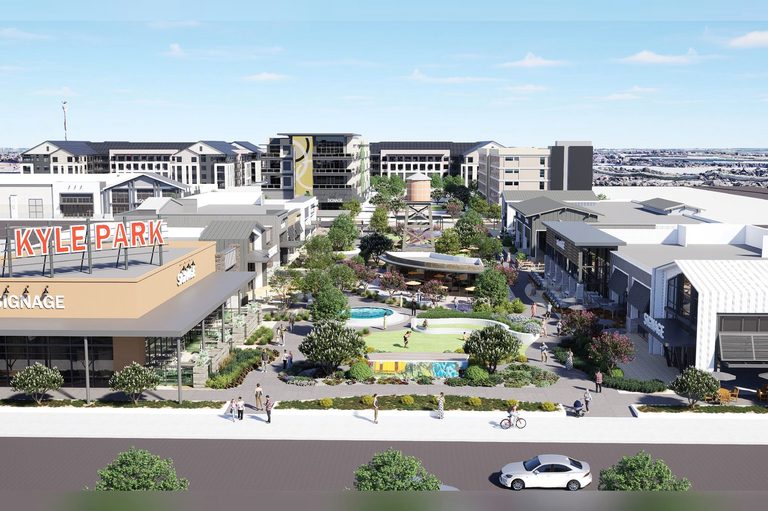
Construction has begun on Kyle Park, a 101‑acre mixed‑use development that promises to keep more consumer dollars in Kyle and generate new jobs for residents. The $280 million project, led by Houston‑based developer NewQuest, will feature 400,000 square feet of retail and dining, 421 multifamily units, a hotel and a public green space with a pavilion and a replica of the iconic Kyle water tower.
Local revenue retention and incentives
City Economic Development Director Victoria Vargas emphasized that the project was designed to retain spending locally. “This was definitely done with the intention of keeping dollars here local; that’s our goal,” Vargas said. “Those dollars help the entire community. They fund roads, they fund infrastructure, sidewalks, all the amenities that our community needs.”
In December 2023 the city approved roughly $41.27 million in incentives—about 76 % from Kyle and the remainder from Hays County—through a Chapter 380/381 agreement, public‑infrastructure funding, land acquisition and a Tax Increment Reinvestment Zone (TIRZ). The incentives are tied to benchmarks such as completing the Urban District within nine years.
Economic impact projections
According to city agenda documents, the development is projected to generate $93.38 million in sales and property tax revenue through 2053, with $65.13 million earmarked for the city. Annual estimates include roughly $2.5 million in sales‑tax revenue and over $1 million in property‑tax revenue. The shift from the former agricultural exemption—previously yielding about $315 in combined taxes—to an estimated $6.55 million in total taxes marks a dramatic increase in local fiscal capacity.
Job creation and community benefits
Once operational, Kyle Park is expected to create about 800 full‑ and part‑time jobs, giving residents more opportunities to work close to home rather than commuting to Austin or San Marcos. “Everybody leaves Kyle to go to work,” Vargas noted. “We were a bedroom community, but as we expanded healthcare, higher education and local industry, restaurants began arriving.”
The development will also connect to the city’s Vybe Trail network, enhancing pedestrian and bike access. An Urban District within the project must reserve 10 % of retail space for small businesses, supporting local entrepreneurs.
Road improvements and timing
Four road projects surrounding the site—Kohlers to Seton Segment 2, Bebee Road West, Bebee Road East and Kohlers to Seton Segment 1—total $132.8 million and are funded entirely by the 2022 Kyle bond. The first two are slated for completion in summer 2027, before the first phase of retail opens, ensuring easy access for shoppers and retailers alike. “The roads had to be under construction before Kyle Park could start their construction, just because of timing and mobilization, but also the retailers wanted to be assured those roads were going to happen,” Vargas explained.
Confirmed tenants and amenities
Confirmed dining options include Gringo’s, Potbelly Sandwich Works and Dave’s Hot Chicken. The project also plans a hotel and a green space featuring a pavilion and a replica of Kyle’s historic water tower, adding both recreational and aesthetic value for residents and visitors.
Community perspective
Hancock, a city official, summed up the broader vision: “We’re looking at significant private investment, hundreds of potential jobs and additional sales‑tax revenue. But just as important, it helps make Kyle a more attractive place to live and do business.”
The Kyle Park development illustrates how strategic public‑private partnerships can boost local economies, create jobs, and enhance quality of life while preserving the community’s character.
Original reporting: Community Impact — Austin — read the source article.