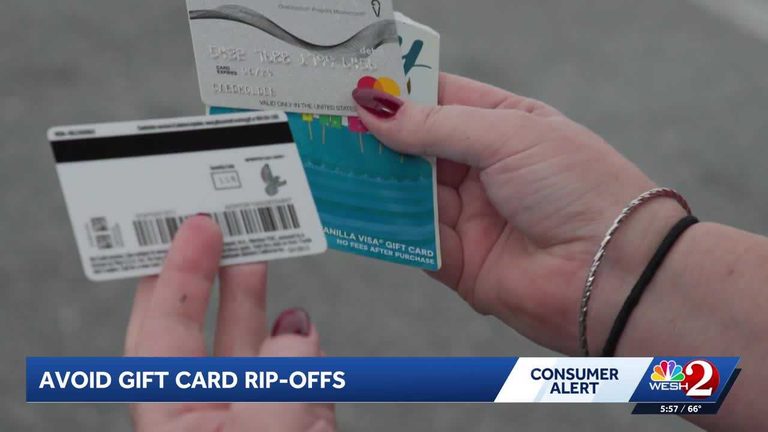
When Ashley Rojas bought a $50 Visa gift card at a Family Dollar in Kissimmee for her husband’s boss, the card was declined at the point of sale. “I was embarrassed, really embarrassed,” Rojas said, noting the card could not be replaced.
How scammers operate
Gerry Mendiburt, director of investigations at the Better Business Bureau (BBB), explained that fraudsters obtain the card’s account number and PIN before the card is even used. They then run automated bots that constantly check balances, siphoning any loaded funds into their own accounts.
Holiday spike in losses
The BBB reports that gift‑card scams typically surge during the holiday season, with consumers losing $5.4 million over the past year. Scammers often remove cards from store shelves, record the numbers, re‑package them to hide tampering, and return them for unsuspecting buyers.
Signs of tampering
Rojas noticed hole punches along the barcode and a mismatched expiration date on the packaging—clear indicators that the card had been altered. “It was just $50 for me, but imagine if it were $200 or $1,000,” she warned.
Online exchange traps
The BBB also cautions against websites that promise to exchange gift cards for cash. One site, 4Cards Exchange, has been linked to at least 25 complaints. One Floridian reported submitting a $195 Bath & Body Works card, only to have the money taken with no response from the site. Another user in Melbourne said a $125 cash exchange never arrived.
Protect yourself
Consumers are urged to carefully inspect gift cards before purchase—check for intact packaging, matching expiration dates, and unaltered barcodes. When using online exchange services, verify the company’s reputation and read reviews. If a deal seems too good to be true, it probably is.
For further assistance, contact your local Better Business Bureau or report suspicious activity to the Federal Trade Commission.
Original reporting: WESH Orlando — read the source article.